How Does a Hydraulic Bollard Protect a Site
Perimeter security has a fundamental problem that most people do not think about until it is too late. A wall or a fence stops people, but it stops vehicles only if it is built like a fortress. A gate controls traffic, but a gate can be rammed. The middle ground is a device that is invisible when it is not needed, impossible to drive through when it is, and pleasant enough to live with every day. That is exactly what a hydraulic bollard is, and it is the reason this category of equipment has become a standard feature at entrances around the world. At ZOJE, we build the hydraulic bollard for sites that need real vehicle barrier protection without turning the entrance into a prison gate.
Why a Hydraulic Bollard Instead of a Fixed Post?
The simplest way to stop a vehicle is a fixed post buried in concrete. It works, but it is permanent. A fire truck needs to get in. A delivery truck needs to get in. A maintenance vehicle needs to get in. With a fixed post, you either remove it and lose the protection, or you leave it and make life difficult for everyone who legitimately needs access. A retractable bollard solves this by rising only when the site needs protection and lowering flat to the ground when vehicles are allowed to pass.
The hydraulic bollard takes this idea further than an electric or pneumatic unit. Hydraulic drive gives the cylinder far more pushing force for its size, which means the bollard can rise quickly under load and hold its position reliably. Our unit has a preset rise and drop time of 1.5 to 6 seconds, which is fast enough to close a lane when an alert is triggered and smooth enough not to surprise drivers who are already past the decision point.
There is also a maintenance argument. A hydraulic system has fewer moving parts at the point of use than a mechanical screw drive, and the power unit sits in a compact integrated housing that can be serviced without digging up the installation. This is the kind of detail that matters on a site where the bollards are expected to work for years without constant attention.
The Strength Numbers Behind the ZOJE Hydraulic Bollard
The question every buyer asks about a vehicle barrier is simple: what can it actually stop? The answer for the ZOJE-HB168 is an 80-ton container truck. That is not a marketing number. It is the passing pressure rating the unit is designed and tested against, and it comes from the way the bollard is built.
The cylinder is 219 millimeters in diameter, made of 304 stainless steel with a wall thickness of more than 6 millimeters, finished with a rust primer coating. The structure uses a double anti-crash guide system that absorbs and redirects impact forces instead of letting them shear the mechanism. The housing is welded from heavy-gauge stainless steel, and the whole assembly weighs 150 kilograms.
At ZOJE, we do not assume the numbers hold. Every bollard goes through 24 hours of uninterrupted operation testing before it leaves the factory, and the test covers the rise and drop cycles, the control system, and the emergency functions. The unit is rated IP68 for water and dust protection, which means it can sit in a flooded trench and keep working when the water drains away.
Built for Life Outdoors
A bollard lives in a hole in the ground, in the rain, under snow, and in the dust. It does not get a climate-controlled room. The ZOJE-HB168 is designed for this reality. The working temperature range is minus 30 to plus 70 degrees Celsius, and the unit handles relative humidity up to 95 percent without condensation. The stainless steel cylinder is brushed and rust-proof, so it does not need painting or coating maintenance over its service life.
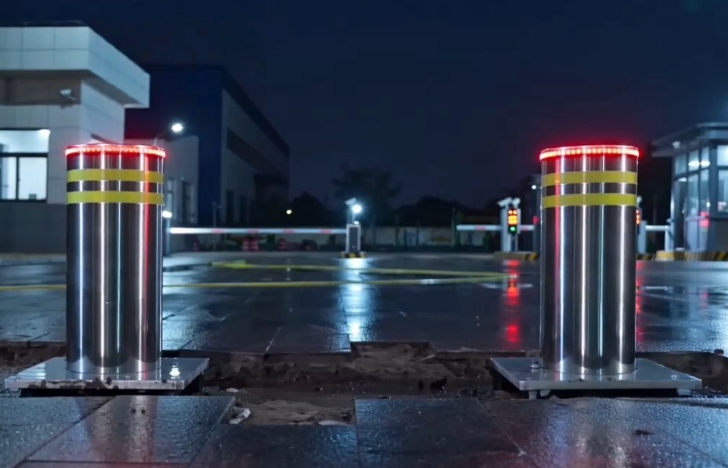
The top cap carries an optional LED ring that lights up when the bollard is active. At night, that red light ring makes the barrier visible to drivers long before they reach it, which is a genuine safety feature, not decoration. The cylinder also carries reflective warning bands, so even with the lights off, headlights pick up the bollard from a distance. The top cover is waterproof and dustproof, sealing the column against the weather that eventually kills cheaper units.
One detail that is easy to overlook is drainage. Water collects in bollard trenches, and standing water destroys electronics. Our unit uses a natural seepage and automatic drainage system that moves water out of the pit, so the control components are not sitting in a puddle after a storm.
Control Options for Every Site
A vehicle barrier is only useful if the right people can operate it reliably. The ZOJE-HB168 supports multiple control methods, including RFID cards, wireless remote control, cable push buttons, and smartphone control via Bluetooth. A site can run the bollards as part of an existing access control system, triggered by the same card readers that manage the pedestrian gates, or operated independently by a guard at the gatehouse.
Power failure is where many bollard systems fail in real life. If the power drops, a hydraulic pump with no backup locks the bollard in whatever position it was in, which can trap a vehicle inside or leave a lane open. Our unit handles this two ways. First, it can be lowered or raised manually when power is off, so a facility manager can always open the lane by hand. Second, an optional backup EPS emergency power unit keeps the system functional through short outages. This is the kind of planning that separates a bollard installation from a bollard problem.
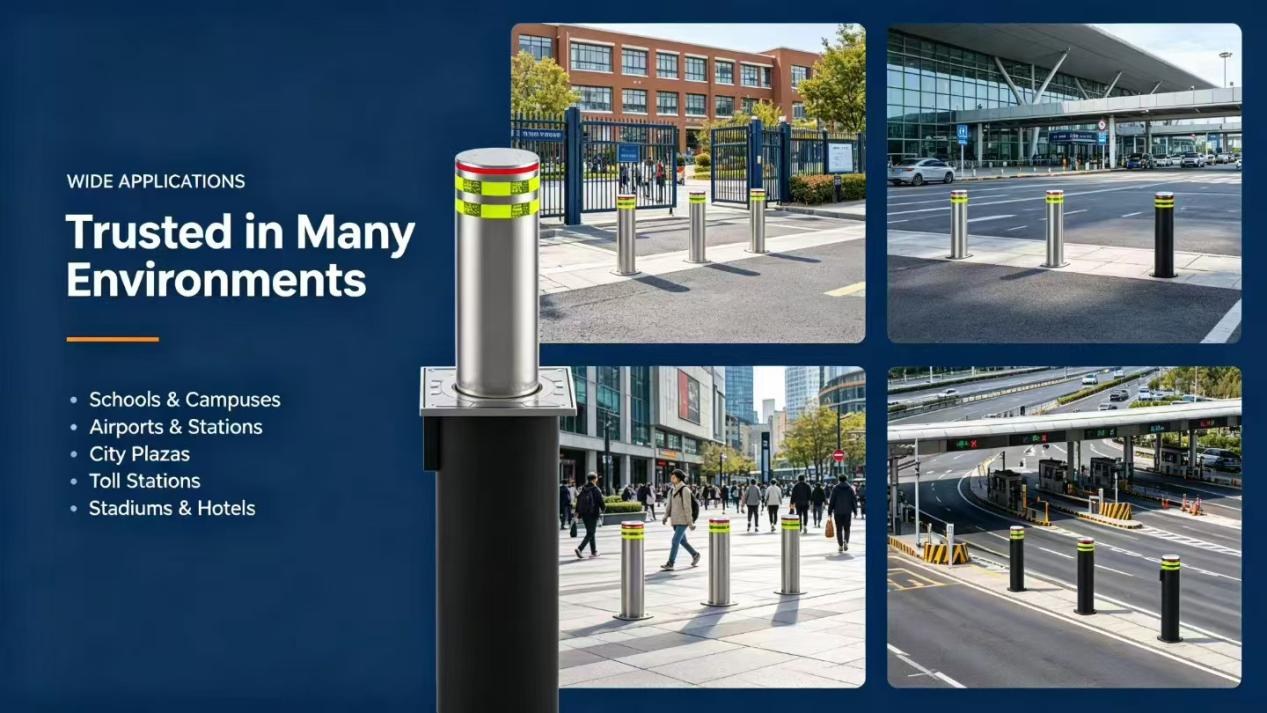
ZOJE has installed hydraulic bollards at university campuses, government buildings, airports, hospitals, shopping centers, sports stadiums, amusement parks, and apartment complexes. The common thread is that these sites need to stop vehicles without stopping people. A campus needs to let students walk freely across pedestrian walkways while preventing a car from driving into a crowd. A hospital needs an ambulance to reach the emergency entrance in seconds while keeping the parking lot secure. A stadium needs crowd safety during events and normal traffic flow on ordinary days. The hydraulic bollard handles all of these because it is there when needed and gone when it is not.
ZOJE also builds these units for parking lots and industrial sites, where the bollard works alongside the parking barrier and access control equipment we already manufacture. Because we make the whole entrance system, we can coordinate the bollard, the barrier, and the gate into one coherent setup rather than three products from three vendors.
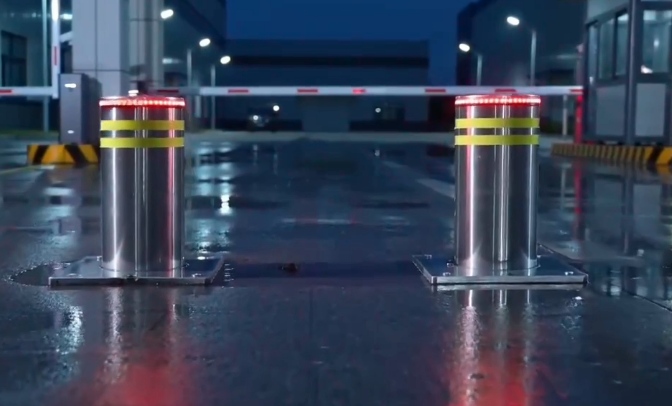
No two entrances are identical, which is why our hydraulic bollard is available with customized dimensions and configurations. We regularly supply OEM and ODM orders, and we have built bollards to match specific project requirements: different cylinder heights, different housing finishes, different control integrations, and bollard arrays that work in sequence to protect a wide entrance. If a project needs a bollard that matches a building's design language, we can produce it.
Every custom order goes through the same 24-hour factory test as the standard unit, so customization does not mean a drop in quality. The product carries a two-year warranty, and ZOJE keeps spare parts in stock for units that are years out of warranty.
If you are planning a site that needs vehicle access control and you are weighing a hydraulic bollard against a fixed barrier or a barrier gate, the deciding factor is usually flexibility: do you need the entrance to open fully when it should, and close hard when it must? Our sales team can help you answer that question for your specific site, and we can supply samples or arrange a demonstration before you commit to a larger order.