Customized Swing Turnstiles and the Integration of Facial Recognition Technology
With the advancement of access control technology, more and more enterprises have been increasing their demand for customized swing turnstiles in recent years, primarily due to heightened security awareness. Companies want to control access while providing more flexible and convenient solutions. Different types of venues have varying customization needs for turnstiles; for example, office buildings, schools, and factories all have different requirements for access efficiency and security. Furthermore, an increasing number of enterprises are opting for swing turnstiles integrated with facial recognition technology, which not only improves access efficiency but also enhances security. In this regard, customization can meet the specific needs of different companies, such as recognition speed, personnel flow, and anti-collision functions. Therefore, reasonable customization of turnstiles can not only improve daily management efficiency but also help enhance overall security protection.
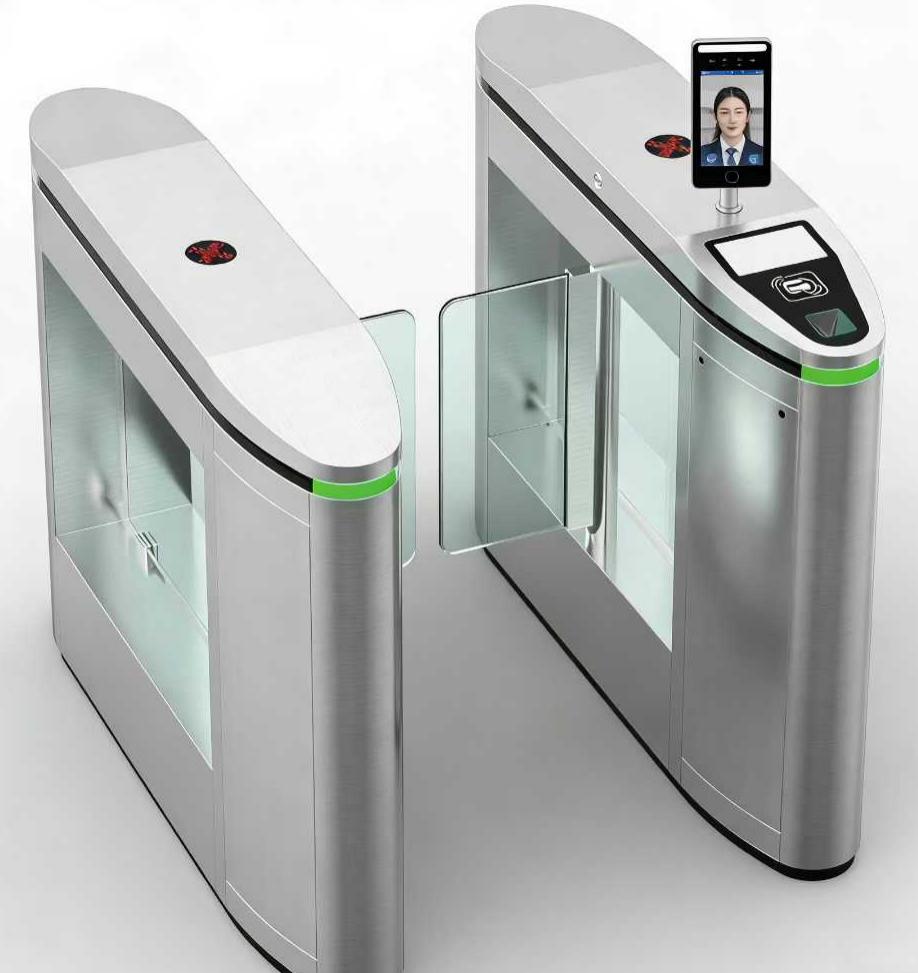
Smart swing turnstiles equipped with facial recognition devices are highly intelligent access control devices that utilize advanced image processing and artificial intelligence technology to achieve fast and accurate identity verification. This equipment significantly improves access efficiency, reduces queuing time, and provides stronger security guarantees. Compared to traditional card swiping or password entry methods, facial recognition avoids problems such as lost cards or forgotten passwords. When choosing facial recognition turnstiles, their excellent performance in high-traffic areas is clearly evident, such as in various office buildings, shopping malls, and public transportation environments. These turnstiles can monitor and record entry and exit information in real time, providing effective data support for enterprises and helping managers manage more effectively and comprehensively.
With the widespread application of facial recognition turnstiles in various venues, their core technology—facial recognition algorithms—continues to be optimized, significantly improving recognition speed and accuracy. Modern facial recognition systems typically use deep learning models, which can complete the entire process from image acquisition and feature extraction to identity matching in milliseconds. Even under complex conditions such as varying lighting, mask-wearing, or partial occlusion, advanced algorithms can still maintain a high recognition success rate.
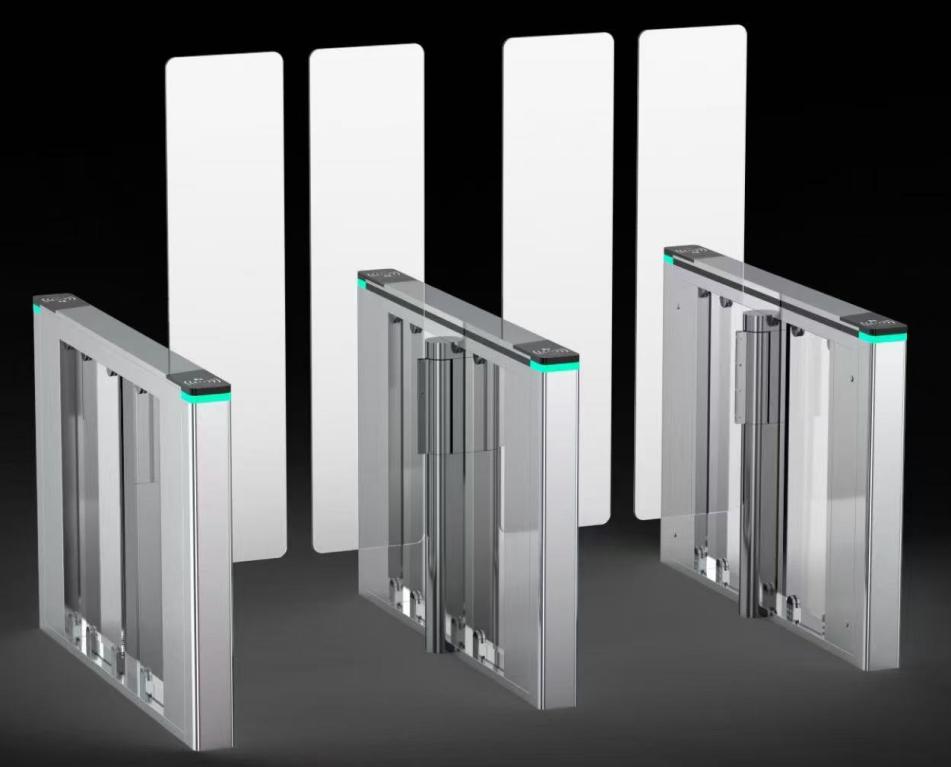
When deploying customized swing turnstiles, enterprises need to consider various factors. First is environmental adaptability design. The protection level of the turnstile, the parameters of the recognition camera, and the supplementary lighting system need to be adjusted accordingly to different indoor and outdoor lighting conditions, temperature and humidity, and spatial layouts. For example, factory workshops may require turnstiles with higher security levels at entrances and exits, while high-end office buildings prioritize aesthetic design and environmental integration. Secondly, system integration capabilities are crucial. Modern intelligent turnstiles often need to seamlessly integrate with existing enterprise access control systems, attendance management systems, visitor management platforms, and even fire alarm systems. This requires suppliers to provide flexible API interfaces and customized development services.
In the future, intelligent turnstile technology will exhibit a diversified development trend. On the one hand, multimodal biometric recognition technology is emerging, combining facial recognition with fingerprint, iris, or palm vein recognition to meet the needs of higher-security locations. On the other hand, the deeper application of artificial intelligence technology will enable turnstiles to possess more intelligent behavioral analysis capabilities, such as abnormal crowd detection, reverse intrusion warnings, and tailgating detection, further strengthening security. Furthermore, the integration of Internet of Things (IoT) technology will make turnstiles important nodes in smart building management systems, with real-time access data providing decision support for enterprise space utilization, energy management, and security alerts.
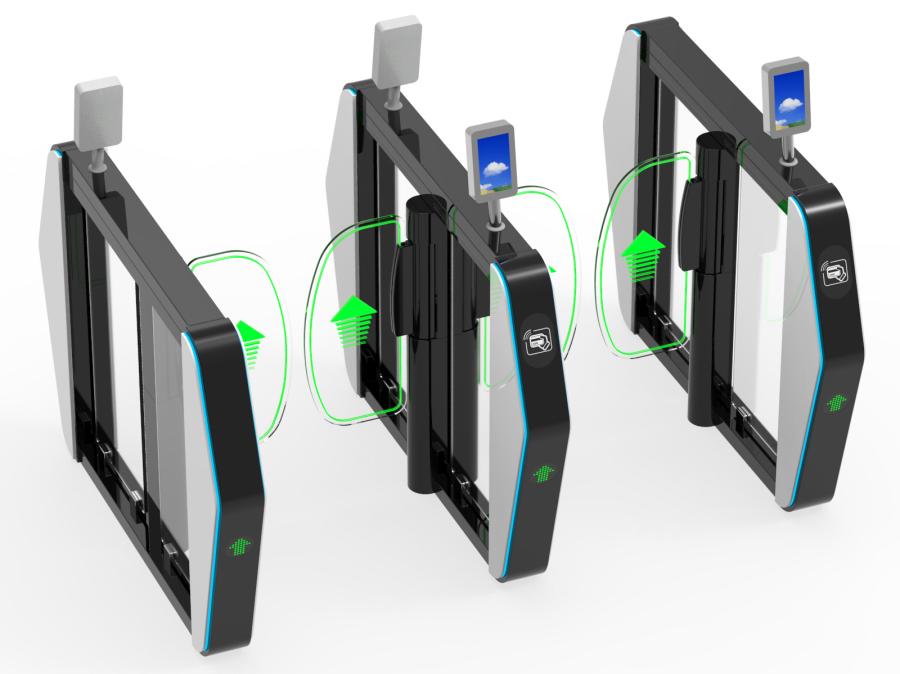
The combination of customized intelligent swing turnstiles and facial recognition technology is redefining access management in modern spaces. It is not only a physical access control point but also a data collection node, a security checkpoint, and a support point for management decisions. Through reasonable customization and deployment, enterprises can not only improve access efficiency and security but also obtain valuable space utilization data, creating conditions for refined management and service optimization.