What Are the Differences Between Speed Gates and Traditional Swing Gates?
Both speed gates and swing gates are pedestrian access control systems, and their appearance is very similar. Their opening and closing methods are the same. In terms of usage, ZOJE's speed gates and swing gates are essentially the same. However, speed gates have a wider range of applications. In addition, there are the following differences:
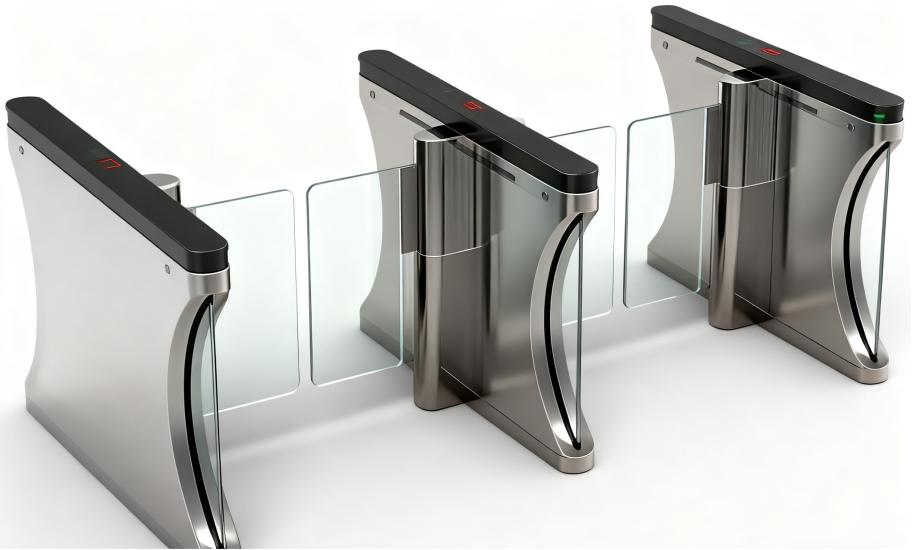
1. Different main components:
Speed gates use a 32-bit embedded microprocessor for control, resulting in a very fast opening speed (35-45 person/minute). They allow for continuous card swiping and opening, have a memory function, and can be connected to fire protection systems. Speed gates can intelligently manage various situations. For example, if a pedestrian is carrying a backpack or large luggage, the speed gate will not close even if the luggage doesn't pass through quickly after opening. During the closing process, if someone enters without authorization, the gate will automatically open, providing an anti-pinch function. Swing gates open more slowly than speed gates. They open automatically after a power outage, but lack the fire alarm connection function. During operation, conventional swing gates rely solely on their anti-pinch system to detect and manage the movement of pedestrians or objects. Speed gates typically consist of a chassis, mechanism, servo motor, control panel, flashing light, and infrared sensors, while swing gates mainly consist of a chassis, mechanism, DC motor, limit switch, control panel, flashing light, and infrared sensors. Furthermore, the servo motors in speed gates use advanced SVPWM spatial vector control, which provides high-voltage protection, low-voltage alarm, overcurrent protection, and encoder alarm functions. On the other hand, swing gates typically use brushless motors, which are characterized by uniform speed movement.
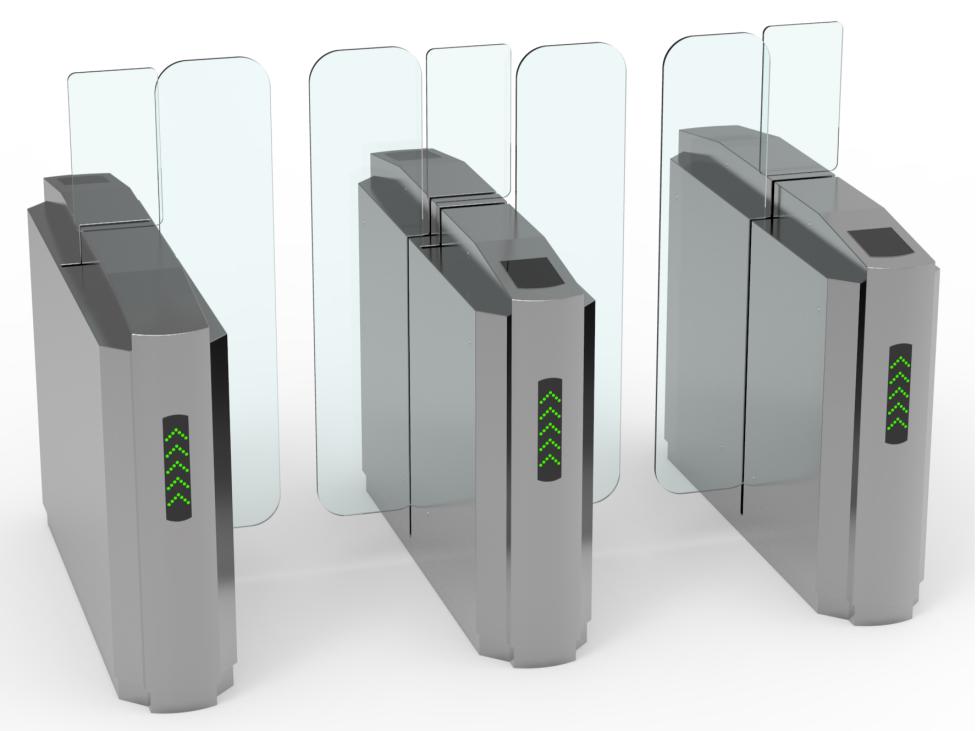
2. Different mechanisms:
The mechanisms of speed gates usually use an electromagnetic clutch and an encoder in combination. The high-efficiency electric motor maximizes power transfer to the swing arm. The motor is typically brushless or a servo motor. Under a sudden external force, the swing arm can deviate from its zero position, causing the solenoid valve to lock immediately. After the force is removed, the encoder guides the swing arm back to its zero position, allowing for automatic reset. In case of unauthorized access, the solenoid valve locks immediately and triggers an alarm. On the other hand, swing gate mechanisms typically use sliding friction, a four-wheel, four-groove principle. This results in low transmission efficiency; each swing of the arm causes the grooved wheels to slide and rub once. The positioning is also fixed, meaning that without anti-collision devices, the swing arm can directly damage the mechanism or the swing arm itself when subjected to an external force. Furthermore, the motor used is a brushed motor, which provides an intelligent alarm for unauthorized access but does not automatically lock the gate.
3. Appearance Details:
Speed gates have a more streamlined appearance, a smaller mechanism, utilize a solenoid valve clutch, and have a thicker swing arm drive rod. The overall manufacturing process is more advanced. From the outside, the swing gate features a wider casing due to its larger mechanism and the use of 304 stainless steel in most of the arms, giving it a more robust overall appearance.
4. Passage Experience and Efficiency:
In terms of user experience, speed gates prioritize a fast, continuous, and uninterrupted passage. Thanks to servo motors and high-precision control algorithms, they offer smooth starting and stopping and a rapid response, with virtually no delay in opening and closing. This makes them ideal for continuous, high-volume traffic situations during peak hours, such as office building lobbies, subway stations, airports, and high-end industrial parks. Furthermore, speed gates feature more sophisticated logic for managing multiple consecutive card swipes and intruder detection, effectively reducing errors and improving overall throughput efficiency. In contrast, traditional swing gates have a relatively slower passage rate, making them more suitable for locations with lower traffic volume and less stringent speed requirements, such as general office areas, community entrances, and schools.
5. Different Security Capabilities:
Speed gates offer a more comprehensive security design. In addition to standard infrared anti-pinch and anti-collision rebound functions, they can accurately identify unauthorized entry, reverse entry, and loitering through the coordinated evaluation of multiple pairs of infrared sensors, encoders, and control systems, quickly triggering audible and visual alarms or system recording, resulting in a higher level of security. Swing gates, on the other hand, rely more on basic infrared anti-pinch functions for security protection, and their ability to identify complex passage behaviors is relatively limited, presenting certain limitations in high-security scenarios.
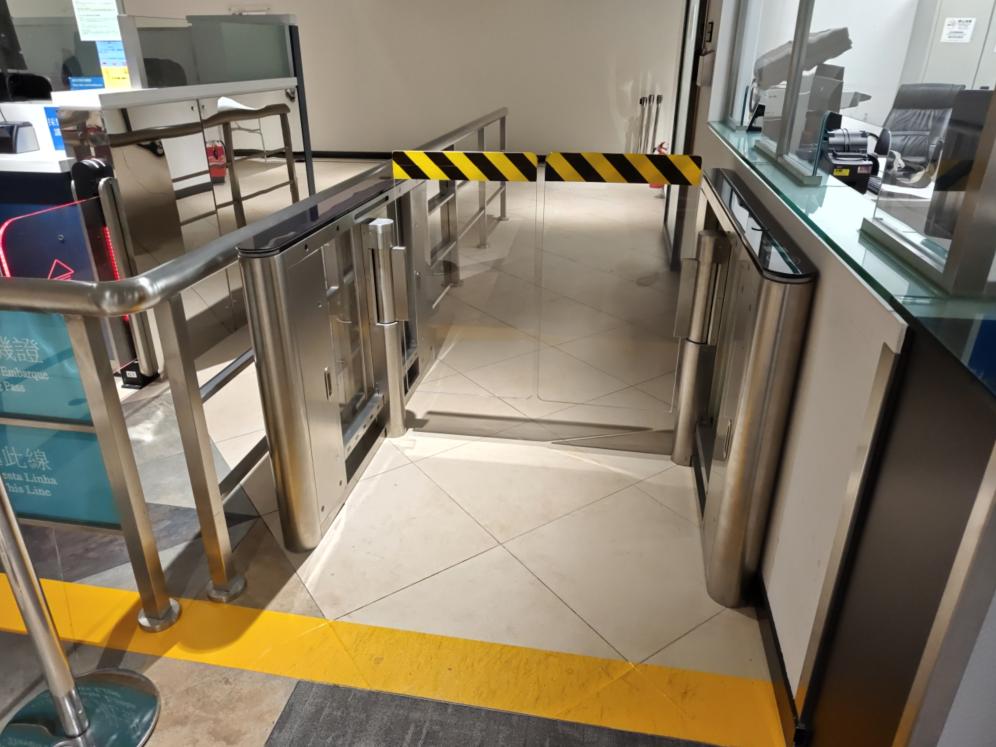
6. Different Application Scenarios:
From a general positioning perspective, speed gates are geared towards mid-to-high-end intelligent access solutions, balancing efficiency, security, and aesthetics, and are often used in projects with high requirements for management standardization and technological sophistication. Swing gates, on the other hand, have the advantages of a simple structure and relatively controllable cost, making them suitable for projects with primarily functional needs and relatively limited budgets. Therefore, there is no absolute superiority or inferiority between the two; rather, they are suited to different application scenarios and customer needs.
In summary, if a project prioritizes traffic efficiency, security levels, and overall quality and image, speed gates are undoubtedly a better option; if basic traffic management and cost-effectiveness are more important, traditional swing gates still offer significant practical value.