How Do Vehicle Barrier Gates Implement Anti-collision Technology?
Barrier gates, also known as vehicle barriers, are access control devices specifically used to restrict vehicle movement at road entrances and exits. Electric barrier gates can be raised and lowered independently via wireless remote control, or they can operate automatically through a parking management system. With the continuous development of the automotive industry and the increasing number of vehicles, the demand for barrier gates is growing, and people have higher requirements for their performance. These include integrated gate mechanisms, clutch devices, intelligent anti-lifting functions, Auto-reverse on obstacle, and anti-collision breakaway mechanisms. Among these, the anti-crushing function of parking lot barrier gates is a feature that most customers are very concerned about. So, how is barrier gate anti-crushing technology implemented?

1. Infrared Anti-collision
Infrared anti-collision technology involves installing infrared beam devices on both sides of the entrance and exit barrier gates. During the gate arm's descent, if a vehicle enters, the infrared beam will be interrupted, triggering a signal to automatically raise the gate arm, thus achieving the anti-collision function.
2. Ground Loop Detector Anti-collision
Generally, when installing a smart parking system, two ground loop sensors are installed at the entrance and exit. When a vehicle enters the parking lot, the first ground loop sensor detects a trigger signal, and the barrier gate raises its arm. When the vehicle passes the second ground loop sensor at the entrance, the ground loop signal disappears, and the barrier gate lowers its arm.

3. Radar Anti-collision
Radar technology has significant advantages. It is not only easier to install but can also automatically identify vehicles and pedestrians, effectively preventing accidents involving the gate arm "crushing" vehicles or people. Furthermore, compared to traditional infrared and laser vehicle detectors, microwave vehicle detectors have stronger environmental adaptability and are not affected by other factors, effectively reducing the failure rate. Radar vehicle detectors consist of two components: a "trigger radar" and an "anti-collision radar." The former is installed on the housing of the license plate recognition camera, and the latter is installed on the housing of the electric barrier gate. When a vehicle passes through the barrier gate, it first enters the microwave range of the "trigger radar," and the gate arm will not lower until the vehicle has completely left the range. During this time, if the "anti-crushing radar" detects the presence of a vehicle or pedestrian near the gate arm, it will keep the gate arm in the raised position.
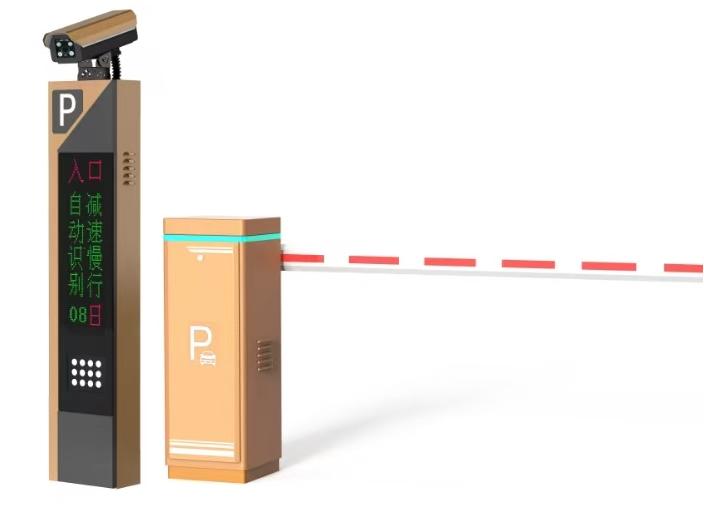
4. Digital Anti-collision System
The digital anti-collision system offers high security. This digital automatic detection technology requires no other auxiliary protection devices. It precisely collects and monitors the barrier arm's operation data in real time. If the barrier arm encounters an obstruction during operation, it will quickly lift. During the lowering process, the integrated circuit continuously monitors the motor's operating current. If the barrier arm is obstructed during descent and the motor current change exceeds a preset value, a signal is output to control the motor to stop and then reverse, causing the barrier arm to stop descending and then lift, thus achieving the anti-collision function.
In addition to the anti-collision technology mentioned above, ZOJE's barrier gate arm is also equipped with a unique anti-collision rubber strip, effectively protecting vehicles from scratches. Unlike other brands, ZOJE's anti-collision rubber strip uses polyurethane material, which will not harden or become brittle after years of use. When the arm is severely impacted, the barrier arm can automatically detach, reducing damage to the vehicle and equipment caused by the impact. Depending on site requirements, ZOJE's barrier gate can be set to automatically raise the barrier arm after a power outage, or automatically lower and lock the barrier arm in case of an emergency, perfectly meeting the needs of different scenarios.