How Do the Airport AB Interlocking Turnstiles Work?
In airport security systems, the AB interlocking turnstile is a security barrier connecting the security check area and the waiting area. With the rigid rule of "one door closed, the other will not open," it physically and technologically prevents security risks such as tailgating and illegal entry, thus strengthening the defense line for aviation safety. Behind this seemingly simple access rule lies a deep integration of hardware linkage, intelligent control, and logical verification.
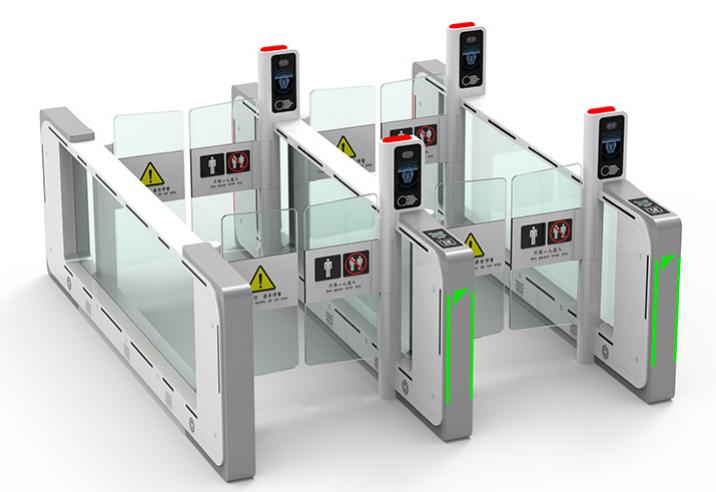
The area after airport security checks is a high-security zone, directly related to flight operations and passenger safety. Traditional single-door turnstiles are prone to tailgating issues due to overcrowding and lapses in manual supervision. The AB interlocking turnstile, through a dual-door linkage control mode, creates a transitional security buffer zone—passengers must first pass through door A to enter the buffer zone; only after door A is completely closed and secondary identity verification is completed will door B unlock and allow passage. Similarly, if door B is open, door A remains locked.
The core objectives of this design are twofold: firstly, through physical isolation and phased access, to ensure that every person entering the isolation area undergoes complete security checks and identity verification, preventing "undetected individuals" from sneaking in using others' verification; secondly, to form a "one-way closed-loop" access logic, preventing people from illegally entering the security check area from the isolation area, ensuring the integrity of the security check process. The key to achieving this objective lies in the precise implementation of the "interlocking logic."
The interlocking AB turnstile is not simply mechanical linkage, but a complete control system composed of "hardware sensing - signal transmission - system decision - execution feedback." It can be divided into three levels of protection: physical interlocking, electrical interlocking, and intelligent logic interlocking, ensuring the implementation of the rules step by step.
1. Physical Interlocking: Building a rigid security baseline
Physical interlocking is the "basic defense line" of the interlocking logic, achieving real-time sensing and rigid constraints of the dual-door status through the cooperation of mechanical structures and sensing components.
Both door A and door B of the gate are equipped with high-precision position sensors (such as photoelectric sensors, Hall sensors), which can collect real-time data on the "open/closed/half-open" status of the door body, with millimeter-level accuracy, ensuring no delay in door status feedback. At the same time, the gate turnstile is equipped with a mechanical interlocking mechanism. When gate A is open, the mechanical latch locks the drive mechanism of gate B, preventing gate B from being forced open even if the system issues an incorrect command. Only when the position sensor confirms that gate A is completely closed and locked will the mechanical latch retract, releasing the drive authority of gate B.
2. Electrical Interlocking: Realizing Real-time Signal Linkage
Electrical interlocking is the bridge connecting hardware and the system, achieving rapid response and linkage control of the two gates through circuit design and signal transmission.The control system of the interlocking AB turnstile adopts a "dual-loop independent drive + central linkage" design. Gates A and B each have independent drive circuits, preventing a single circuit failure from affecting the overall function; at the same time, the central control module communicates with the drive circuits of the two gates in real time via the CAN bus, converting the status data collected by the position sensors into electrical signals, forming a closed loop of "status feedback - logic judgment - command output".
3. Intelligent Logic Interlocking: Flexible Management Adapted to Airport Scenarios
If physical and electrical interlocking are rigid rules, then intelligent logic interlocking is "flexible adaptation," combining system algorithms with scenario requirements to make the interlocking logic more suitable for the complex traffic scenarios of the airport. Identity Verification and Interlocking: The AB gate system is deeply integrated with the airport's passenger information system and security check information management system. When a passenger scans their ID card or boarding pass at gate A, the system simultaneously verifies their security check status. Passengers who have not completed security checks or have security check anomalies will trigger an alarm and the gate will immediately lock, even if they attempt to pass through gate A. Only passengers who have passed security checks can complete the entire process of gate A opening-closing-gate B opening.
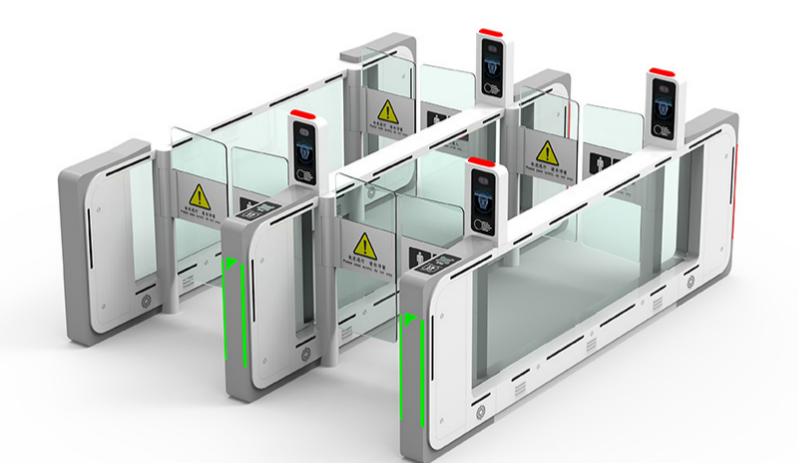
Exception Handling: The system is pre-configured with various exception handling logics, including "tailgating detection," "timeout and loitering detection," and "emergency evacuation." When the infrared sensor detects multiple people entering the buffer zone simultaneously after Gate A opens (tailgating), the system will immediately lock Gate B and trigger an audible and visual alarm, while simultaneously pushing the alarm information to the on-site security terminal. If a passenger remains in the buffer zone for more than 10 seconds, the system will provide a voice prompt "Please proceed quickly." After 30 seconds, it will automatically trigger a security intervention alert. In case of emergencies such as fire or earthquake, management personnel can issue an "emergency release command" through the backend system. At this time, the interlocking logic is temporarily disabled, and both doors open simultaneously to ensure rapid evacuation of personnel.
The "one door closed, the other door remains closed" principle of the airport's interlocking AB turnstile is essentially a synergistic effect of physical rigidity, electrical linkage, and intelligent logic—physical interlocking establishes a solid safety foundation, electrical interlocking ensures real-time linkage, and intelligent logic adapts to scene requirements. This core logic not only eliminates security vulnerabilities but also balances safety and efficiency through technological optimization, becoming an indispensable core device in the airport security system.
In the future, with the continuous improvement of aviation security requirements, the core logic of the interlocking AB turnstile will be further integrated with technologies such as biometric recognition (facial recognition, fingerprint recognition) and big data analysis to achieve "more accurate verification, more intelligent control, and more convenient passage," safeguarding aviation security.