Application of Hydraulic Road Blockers in Vehicle Management of Cross-Border Logistics Parks
With the accelerated integration of global supply chains, cross-border logistics parks face the dual challenges of vehicle traffic efficiency and security control. Hydraulic road blockers, with their high load-bearing capacity, rapid response, and shallow-buried installation characteristics, complement hydraulic automatic bollards and are reshaping the new model of vehicle management in logistics parks.
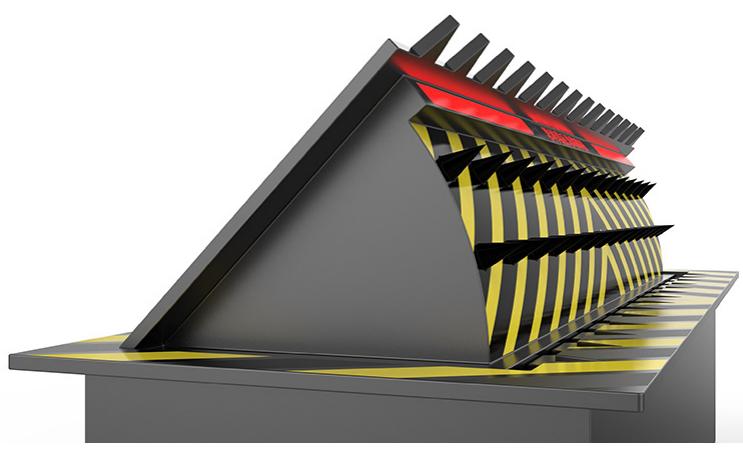
In terms of technological synergy, a single road blocker can cover a 4-meter-wide lane, and its sliding-shaft flipping structure supports 100,000 lifting cycles. Combined with a hydraulic drive system, it achieves rapid interception in 3 seconds, effectively addressing the risk of cargo trucks speeding through checkpoints. Fully automatic hydraulic bollards, through a PLC control system and license plate recognition equipment, enable both seamless passage for VIP vehicles and automatic interception of unauthorized vehicles. The combined deployment of these two types of equipment forms a three-dimensional protection system of "area interception + point control." In core areas such as customs supervision zones, road blockers handle interception at the main road level, while bollards are used for precise control of sorting channels.
Application scenarios are reflected in three aspects:
1. For high-frequency entry and exit scenarios of cold chain logistics vehicles, the road blocker's -45℃ low-temperature resistant hydraulic oil ensures stable operation in extremely cold environments, and its anti-slip surface design prevents container dragging accidents.
2. In bonded warehouse loading and unloading areas, the equipment interacts with WMS system data to achieve automatic release during scheduled truck arrival times and mandatory interception during unauthorized periods.
3. Utilizing LED warning modules and sound and light alarm devices, an intelligent warning system for separating people and vehicles is built, reducing the accident rate caused by mixed pedestrian and vehicle traffic in the park.
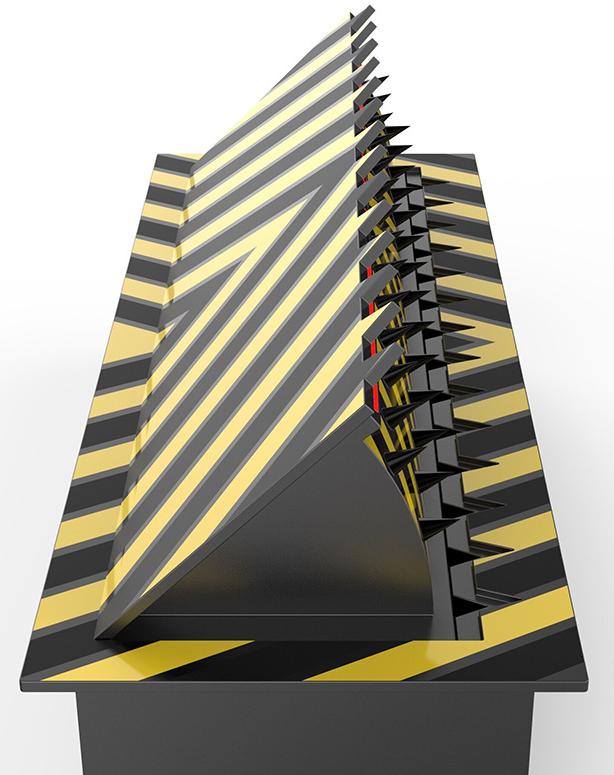
Benefit analysis shows that this model improves vehicle traffic efficiency by 40% and reduces equipment failure rate by 60%. The shallow-buried installation scheme reduces underground pipeline modification costs by 80%, and the IP68 protection rating ensures long-term stable operation in rainy and humid port environments.
In actual implementation, the application of hydraulic road blockers in cross-border logistics parks is no longer limited to the single function of "physical interception," but is gradually extending towards a systematic and platform-based approach. On the one hand, the equipment seamlessly integrates into the park's unified vehicle management platform through standardized communication interfaces (such as TCP/IP and RS485), forming a data loop with TMS, customs supervision systems, and security platforms. This enables multi-dimensional verification of vehicle identity, cargo information, and access permissions, significantly reducing manual verification costs and the risk of human error.
On the other hand, at the park's operational management level, the operating data of the hydraulic road blocker is becoming an important basis for decision-making. Through long-term accumulation and analysis of data such as vehicle traffic frequency, interception records, and abnormal barrier-breaching behavior, management can accurately identify high-risk periods and lanes, thereby optimizing lane layout, adjusting work shifts, and providing quantitative support for insurance risk control and security audits. This "data-driven security" model shifts vehicle control from passive response to proactive prevention.
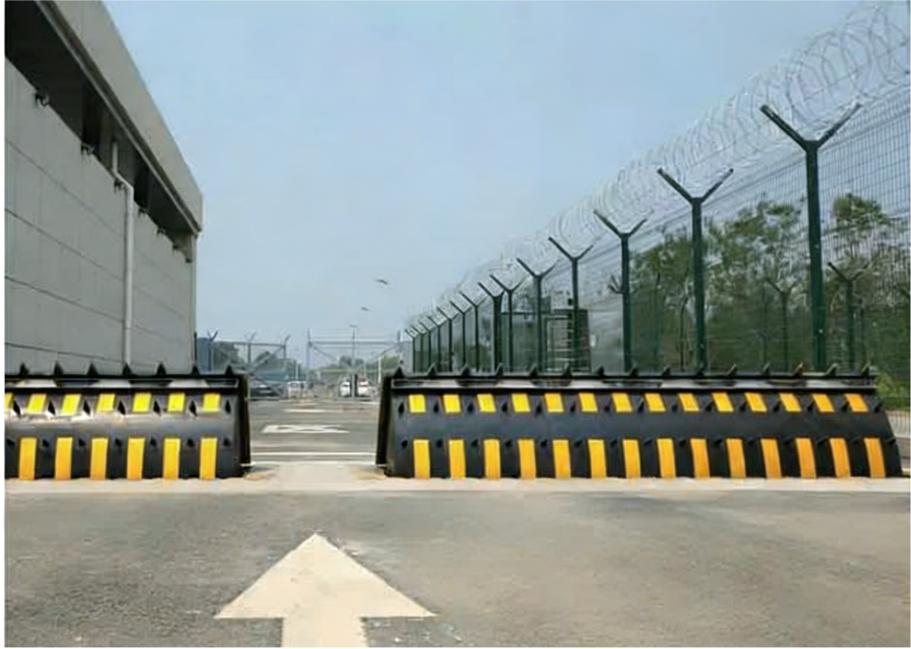
From a sustainable development perspective, the new generation of hydraulic systems continuously optimizes energy consumption and maintenance. Through variable displacement hydraulic pumps, low-power standby modes, and modular structural design, the equipment significantly reduces energy consumption and maintenance frequency while ensuring high-intensity operation, aligning with the development direction of green parks and low-carbon operations. The exploration and application of solar power and energy storage solutions also provide greater deployment flexibility for remote ports or temporary supervision areas.
Overall, the application of hydraulic road blockers in cross-border logistics parks is evolving from a single piece of equipment to a "security infrastructure node." Its deep integration with automatic rising bollards, intelligent recognition systems, and digital management platforms not only improves the park's security level and traffic efficiency but also lays a solid foundation for the efficient, compliant, and sustainable development of cross-border logistics.