What Is a Video-based Parking Guidance System?
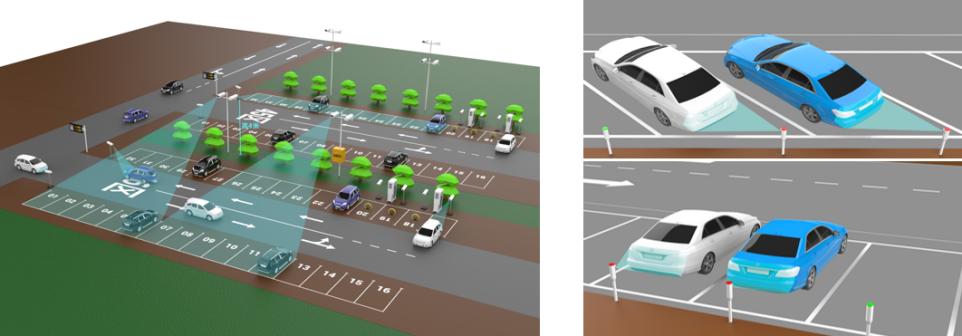
A video-based parking guidance system is a parking management system based on video recognition technology. It uses video parking detection terminals installed in each parking space to determine the space's status in real time, count available spaces, and guide vehicles. The system consists of video parking detection terminals, video node controllers, and a central controller, and can be expanded to integrate an intelligent video-based parking guidance and vehicle search system.
The system uses image processing technology to capture images of parking spaces in real time, with an accuracy exceeding 99%. Information about available parking spaces is displayed on the guidance screen, and the status of each space is indicated by red and green indicator lights. The video parking detection terminal has a wider field of view, allowing for better capture of the vehicle's side view and enabling enhanced security functions such as anti-theft and monitoring. Compared to traditional ultrasonic detection technology, its advantages include convenient wiring, aesthetically pleasing installation, and stable operation, making it ideal for addressing the shortage of urban parking resources and improving parking efficiency.
1. System Features:
License plate recognition cameras are installed above parking spaces using card reader systems. These cameras process video information from one or more parking spaces in real time, detecting the status of the space and the vehicle's license plate. The occupancy status of the parking space is transmitted directly to the parking guidance display to provide instructions to drivers. Simultaneously, the license plate and an image of the parking space are transmitted to a data server for storage and use in vehicle location tracking.
2. Advantages of the System
a) The video-based parking guidance system architecture is simple, effectively reducing construction difficulty and architectural costs. It offers long-distance operation and high stability, ensuring system reliability and wide coverage. Replacing traditional node controllers and central controllers with conventional network switches improves system stability, reduces potential points of failure, and lowers customer hardware costs.
b) The license plate recognition camera uses a dual-port network communication mode. One network cable supports 15 license plate recognition cameras, resulting in significant savings in cabling and labor compared to traditional network cameras (each requiring a separate network cable to a switch). The wiring is also more aesthetically pleasing and simplifies troubleshooting.
c) The license plate recognition unit incorporates RS485 functionality, allowing LED vehicle displays to be connected to the nearest license plate recognition camera. Compared to traditional geomagnetic sensors, this saves on cabling and wiring costs.
d) The TCP/IP network structure greatly simplifies equipment installation and wiring while ensuring the speed and security of data transmission. Furthermore, all components have a modular design, so changes to one device will not affect the normal operation of others. This network structure offers significant advantages when product deployment locations change later. Simply connect the product to the existing local area network at the new location to resume normal operation, which is convenient and fast.
3. System Composition:
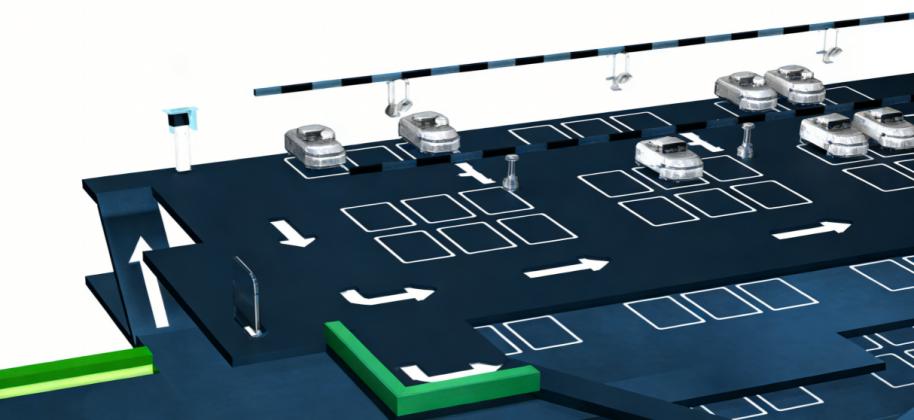
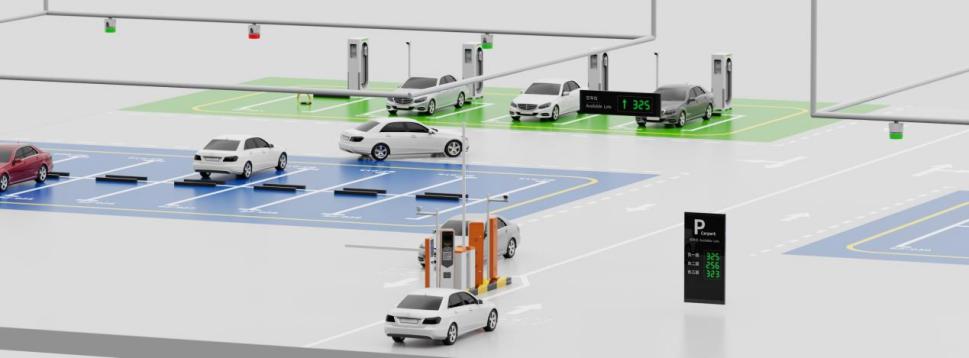
The video-based parking guidance system mainly consists of license plate recognition cameras, reverse search machines, guidance displays, switches, and servers.
a) License Plate Recognition Cameras: Equipped with intelligent functions, these cameras analyze real-time video streams using intelligent algorithms to automatically monitor the status of parking spaces. When a vehicle enters, the detector automatically captures an image of the vehicle and analyzes the relevant information, providing basic data for the parking guidance and reverse vehicle search systems.
b) Reverse Search Machines(Finding your car): Located near stairwells or elevator entrances, these machines allow drivers to easily find their parked vehicles. Each machine consists of an infrared touch screen, a computer, a power supply system, software, and a cabinet.
c) Parking Guidance Displays: Parking guidance displays are installed at key intersections within the parking garage. The number of displays and the displayed text content are customized according to customer needs. They receive information from the node controller and display the location of parking spaces using numbers, arrows, and text, guiding drivers to quickly find available spaces assigned by the system. The parking guidance display receives signals from the server to direct traffic in any direction at each intersection, thus allocating traffic to the most suitable location within the parking garage, ensuring smooth traffic flow and full utilization of parking spaces.
d) Large Outdoor Display: The large outdoor display, located at the entrance of the parking garage, shows the availability of parking spaces for each functional area. It receives information from the node controller and displays the number of available spaces in real time using numbers and text, alerting drivers preparing to enter. It operates 24/7.