The Difference Between Intelligent Pedestrian Access Systems and Access Control Systems
In the field of intelligent security and access management, "intelligent pedestrian access systems" and "access control systems" are frequently encountered, but many customers don't understand the differences and relationship between the two. Some customers even believe there is no difference. In reality, the two have fundamental differences in functional positioning, application scenarios, and technical architecture. Clarifying these differences is crucial for accurate selection based on actual needs, avoiding resource waste caused by conceptual confusion.
1. Different Definitions: "Passage Efficiency" vs. "Access Control"
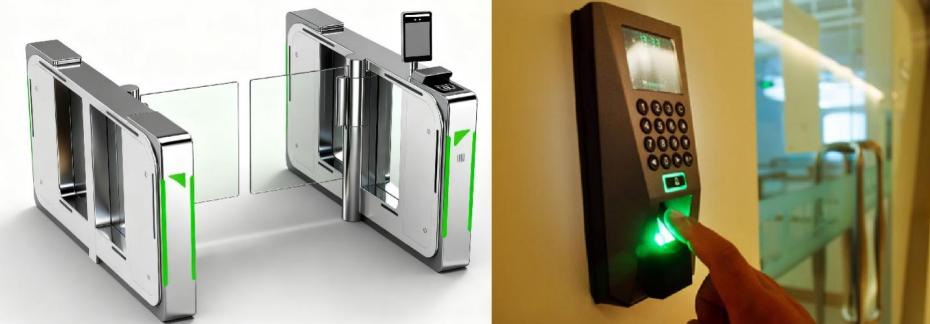
Intelligent Pedestrian Access System: The core is efficient passage + order management, essentially an intelligent pedestrian access channel formed by intelligent access gates. It is based on the identity verification of the access control system, combined with gate hardware (tripod turnstiles, flap barriers, swing gates, etc.), to achieve orderly and rapid passage of personnel, while also possessing functions such as traffic statistics, abnormal alarms, and anti-tailgating. The core demand of an intelligent pedestrian access system is "how to enter and exit efficiently," addressing the issue of "passage efficiency and order."
Access Control System: The core is access management, essentially a "security door." It verifies personnel identity (such as card swiping, password, facial recognition, fingerprint recognition, etc.) to determine whether the person has the right to pass, and then controls the opening and closing of the equipped hardware systems (various entrance doors, safes, access gates, etc.). The core demand of an access control system is "who can enter," addressing the issue of "accurate entry," without focusing on passage speed and personnel traffic statistics.
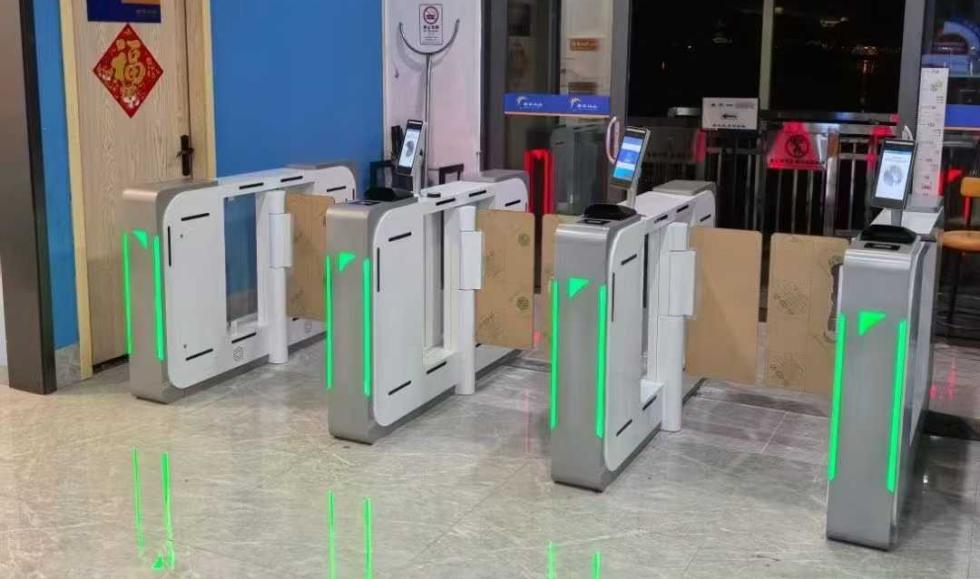
In other words, an intelligent pedestrian access system is an efficient passage channel with access control capabilities. A complete intelligent pedestrian access system often includes an access control identification module, but an access control system does not necessarily need to be paired with access gates. An access control system is merely an access control validator.
2. Functional differences: "Single authentication" vs. "Comprehensive management"
| Function | Access control system | Intelligent pedestrian access system |
| Core functions | Authentication, access control, and door opening/closing control | Identity verification, efficient access control, anti-tailgating, traffic statistics, and anomaly alerts |
| Traffic efficiency | Single person per passage, no optimization for passage speed | Supports multiple users passing through continuously, with fast response time. |
| Anti-tailgating capability | Weak | Strong |
| Data Management | Only records personnel entry and exit times and access authorization results | Record entry and exit times, count the number of people passing through during specific periods, and track pedestrian flow patterns |
| Anti-interference capability | It is mostly used indoors and requires less adaptability to the environment | Suitable for both indoor and outdoor use, with features including waterproofing, resistance to violent impact, and anti-pinch protection |
For example, the card-based access control system installed on the glass door of an office belongs to a basic access control system – it only determines whether the cardholder has permission to enter, and after the door opens, people rely on their own discretion for passage, making it impossible to prevent tailgating; while the facial recognition turnstile at the community entrance belongs to an intelligent personnel access system – it not only verifies identity and prevents strangers from tailgating, but the backend system can also track the number of people entering and exiting each day.
3. Different technical architectures: "Lightweight" vs. "Systematic"
Access Control Systems: These have a relatively simple architecture, typically consisting of an identification terminal (card reader, facial recognition device) + controller + electric lock + management software. The interaction between devices is relatively weak, primarily implementing the basic logic of "verification - door opening," with limited future expandability.
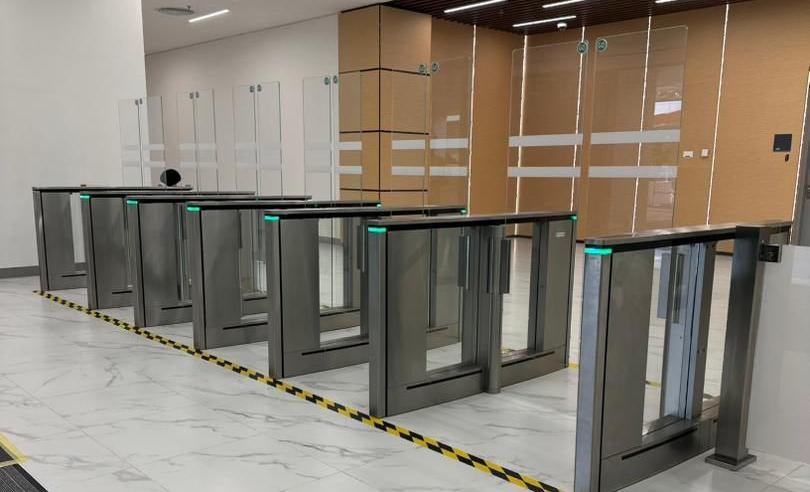
Intelligent Pedestrian Access Systems: These are integrated system solutions, with a core architecture consisting of an identification terminal + gate controller + gate hardware + backend management platform. They not only include the identity verification module of access control systems but also integrate mechanical transmission, infrared detection, and alarm linkage systems of the gates. They support seamless integration with attendance systems, security monitoring systems, and visitor management systems, enabling data exchange.
Intelligent pedestrian access systems and access control systems are not opposing but complementary. In many large venues, they are used together: for example, intelligent pedestrian access systems are installed in the lobby of office buildings (to manage external personnel access), while access control systems are installed in offices within the building (to manage internal area access permissions), forming a multi-layered management system of "external prevention and internal control."