Why the ZOJE Swing Turnstile Fits Offices, Transit Hubs, and Public Buildings
Most people who pass through a swing turnstile never look at it twice. ZOJE builds one of the common models in this category, the ZOJE Swing Turnstile-B607. The type caught on for a plain reason. It controls entry without turning a building into a fortress, and it costs less than the heavy-duty alternatives. The popularity did not come from marketing. It came from the fact that a swing gate does the job with less hardware and less hassle than the alternatives, which is exactly what most buildings want. Factories, supermarkets, apartment complexes, and office buildings all run on them. The B607 is an established part of ZOJE's lineup, and the design reflects real operating conditions more than it reflects a spec sheet.
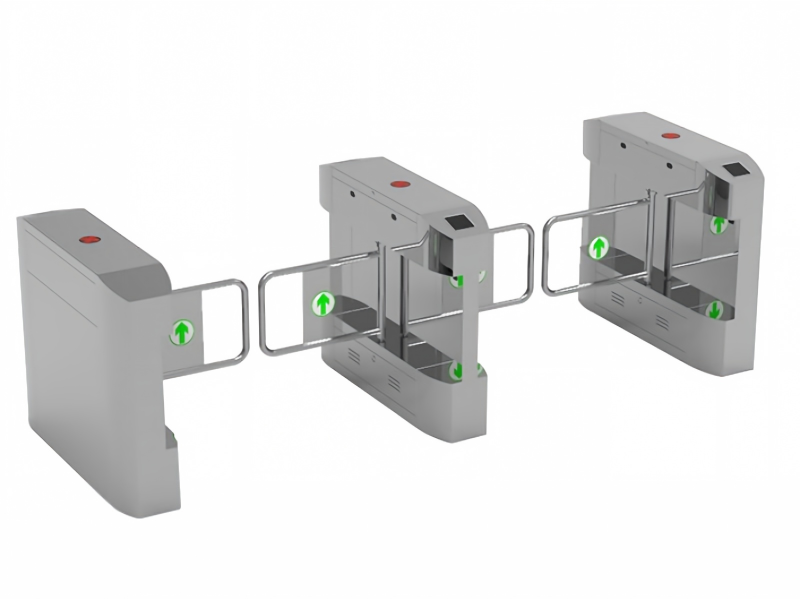
The body of this Swing Turnstile is 304 stainless steel, the grade that holds up to years of contact with bags, keys, carts, and weather. Buyers who need more can order 316 stainless steel, which ZOJE offers as an option. Door panels come in hollowed stainless steel, acrylic, or tempered glass, and each material changes both the look and the strength of the gate. Surface finish can also be matched to the site, so the unit does not clash with the lobby design or the security desk next to it. A unit that sits in a marble lobby and a unit bolted to a factory floor can share the same frame and still look right in their own settings.
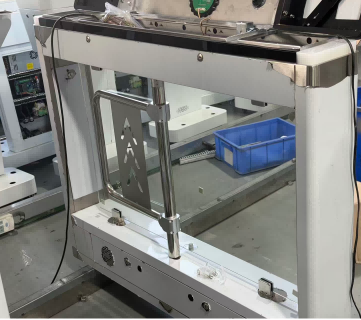
The mechanical core of the Swing Turnstile is where ZOJE spends most of its engineering. The structure is self-designed, and an anti-collision system keeps the doors aligned through heavy use. This matters more than most buyers expect. A gate that drifts a few millimeters will start slamming doors, throwing errors, and backing up traffic, and that is the complaint operators mention first. ZOJE designed around that specific failure instead of padding the feature list.
Then there is the question of what the gate connects to. The Swing Turnstile ZOJE-B607 accepts IC cards, ID cards, RFID, fingerprint readers, face recognition, and QR codes. It also links to access control systems that are already running on site. For a property manager, that removes the worst part of an upgrade, which is throwing away a system that still works. The new gate fits into what is already there.
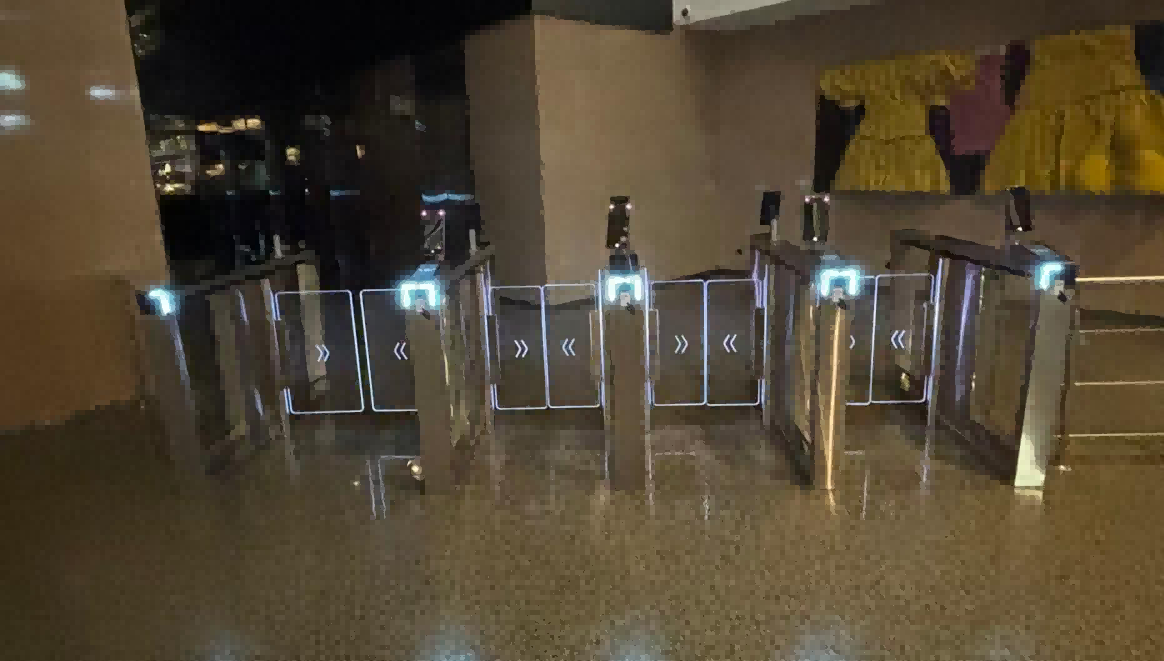
Flexibility matters just as much for a Swing Turnstile. The passage runs one way or two. Width is customizable, and a wider lane is available for wheelchairs, luggage, or strollers. Standard dimensions are 1200 by 280 by 1000 millimeters with a 600-millimeter channel. None of this is unusual on paper. In practice, it means one product family can serve a small office lobby and a large transit terminal without special engineering. ZOJE keeps these options as standard rather than turning them into a custom project.
Safety gets more attention on this swing turnstile than on most models in the same price range. There is triple anti-pinch protection built from physical, infrared, and mechanical layers. An intrusion alarm sounds when someone forces entry. An optional tailgating alarm catches the person who slips through right behind an authorized user. Anti-collision and anti-reverse logic, plus wrong-way detection, round out the package. For a busy entrance these are not extras. They decide whether the gate keeps running or gets switched off.
Emergency handling on the Swing Turnstile is kept straightforward. The gate opens automatically when it has to, and a battery backup keeps that fail-safe working after a power cut. Operators can switch between normally open and normally closed modes. That is how a building lets a crowd through at 8 a.m. and locks things down at 6 p.m. The schedule is set by the operator, not by the machine, and changing it takes seconds rather than a service call. That kind of control is easy to overlook on a datasheet and hard to live without once a building actually runs on it.
The numbers on this Swing Turnstile are easy to check. The brushless DC motor unlocks the door in about 0.2 seconds. Pass speed is around 35 people per minute. Working temperature spans minus 30 to plus 80 degrees Celsius, humidity stays below 95 percent without condensation, and the IP67 enclosure keeps out rain and dust. An LED indicator shows status at a glance, and the motor is rated for 10 million operations.
Customization is part of the offering, not an afterthought. Passage width can go from 600 to 900 millimeters or further if the site requires it. Cabinet material and thickness are selectable, and the drive can be ordered as a brushless DC motor or a DC servo motor. The servo option is worth a look for projects that need more precise speed control. For a project with specific dimensions, this matters. The gate can be made to fit the building instead of the other way around.
That combination explains where the Swing Turnstile actually ends up. Office and administrative buildings, government ministries, banks, airports, metro stations, coach terminals, tourist destinations, industrial buildings, schools, and universities. The settings look nothing alike, but the job is identical: move authorized people through quickly and keep everyone else out. ZOJE has seen the same pattern repeat in each of these settings.
The bigger cost is not the gate itself. It is the downtime and the service calls that follow a cheap unit. That is why ZOJE puts the emphasis on the mechanical structure and offers a two-year warranty from the factory ship date. That period covers the time when most problems, if they are going to appear, tend to surface, so it works as a practical hedge rather than a marketing line. A gate that keeps working quietly is cheaper over five years than a gate that saves money up front and needs attention every few months. For integrators and facility teams, the deciding factor is rarely any single feature. It is whether the gate still works a year after installation. That is the standard the Swing Turnstile was built against, and it is also why the product keeps showing up on project shortlists.