Why Does One LPR All-in-one Machine Replace Three Devices at a Parking Entrance
A parking entrance used to require three separate pieces of hardware. A camera mounted above the lane captured the vehicle, a computer in the booth ran the license plate recognition software, and a display told the driver whether to stop or go. Every one of those devices was a separate cost, a separate cable run, and a separate thing that could fail on a rainy day. The LPR all-in-one machine changes that layout by putting the camera, the recognition engine, and the driver display into a single cabinet that stands beside the lane. ZOJE builds this configuration as the LPR210, and the reason it is spreading across parking projects has as much to do with operations as with technology.
The daily reality of a parking entrance is harsher than the brochure suggests. Plates arrive at odd angles, headlights glare into the camera at night, rain streaks across the lens, and fog softens the characters. A recognition system that works in a demo but fails on the third rainy night of the week costs the operator in queue time and manual checks. The LPR all-in-one machine processes the plate locally with a recognition engine tuned for these conditions, and ZOJE rates the system at 99 percent recognition accuracy across day and night operation. That number matters in everyday use, because the driver who has to reverse and re-approach after a failed read is the same driver who complains about the parking garage on social media.
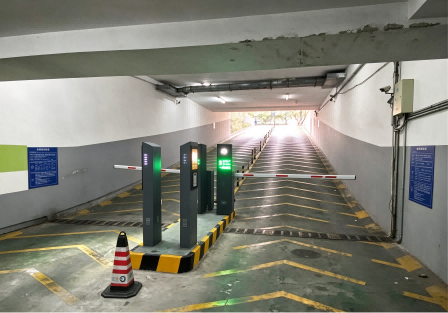
Local processing is the design decision that sets this machine apart from older setups. In a conventional system, the camera sends the image to a server, the server runs the recognition, and the server sends the result back to the barrier. If the network drops or the server goes down, the lane stops working. The LPR all-in-one machine runs the recognition on board, so the plate is matched against the local whitelist and the barrier opens in under a second without waiting for a remote round trip. For a facility that cannot guarantee a reliable network connection — a new development still under construction, a remote site, or a location with intermittent power — this offline capability is the difference between a lane that works and a lane that blocks the entrance. That is the argument for moving recognition to the LPR all-in-one machine in the first place.
For the operator, the shift is from managing several devices to managing one. There is no computer to reboot after a power cut, no separate display unit to replace when the screen burns in, and no cabling between a camera on a pole and a PC in a booth. The LPR all-in-one machine cabinet carries the camera module, the LED display, and the recognition hardware in a single weatherproof body rated IP54, which is enough for a covered or semi-exposed entrance. ZOJE designed the unit for maintenance to be rare rather than scheduled: the operator updates the whitelist, checks the logs, and leaves the hardware alone.
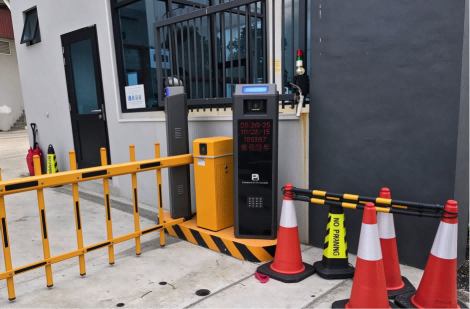
The way drivers interact with the entrance also changes. The display on the cabinet shows the driver what is happening — the welcome message, the instruction to slow down, the confirmation that the plate was read — and the intelligent fill light adjusts automatically so the plate is visible to the camera in daylight and after dark. The result is a lane where the driver does not stop, does not reach for a ticket, and does not wait for a guard. That is the operating model behind unmanned parking, which has been expanding steadily across China and is now being adopted in Southeast Asia, Latin America, and the Middle East, where labor costs and the shortage of trained attendants make automated entrances an easier decision. In each of those markets, the LPR all-in-one machine is the piece that turns an ordinary entrance into a self-service lane.
Plate formats are one of the reasons international projects need a system built for more than one market. A Chinese plate, an Indonesian plate, a Malaysian plate, and a Gulf plate have different layouts, fonts, and color schemes. ZOJE ships the LPR210 with recognition algorithms adapted to the target market's plate standards, which saves the integrator from discovering after installation that the local plate format is not recognized. The same flexibility applies to integration: the machine connects to a barrier, a payment kiosk, or an online payment system through standard interfaces, and the whitelist and blacklist logic can be set per site.
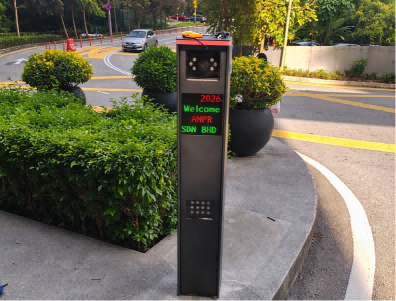
The all-in-one architecture also makes expansion simple. A site that starts with one entrance lane can add lanes later without installing a second server, because each cabinet of the LPR all-in-one machine is self-contained. A property manager who wants to add online payment, monthly pass management, or cloud-based reporting can connect the machine to the management platform over the network. ZOJE supports secondary development on the unit, so an integrator or a large operator can adapt the behavior to their own business rules rather than fitting their rules around fixed software.
The LPR all-in-one machine is built by ZOJE for the entrance that has to run every day without someone standing next to it. The housing is high-strength carbon steel with a sprayed finish, the operating range covers the temperatures a parking entrance actually sees, and the whole unit draws modest power from a standard supply. It handles the regular flow of a shopping center garage, an office building lot, a hospital entrance, or a residential community, and it does the same job in a climate where plates are covered in dust or salt spray.
For a parking operator or an integrator planning a new entrance, the LPR all-in-one machine simplifies the design from day one. One cabinet, one power feed, one network connection — and the recognition, display, and barrier control all work together out of the box. ZOJE supplies the LPR210 with the lane-side installation kit, and the sales team works out the whitelist, payment, and barrier integration with the customer before the unit ships, so the entrance is ready to run when the site opens.