What Did Intersec Buenos Aires Reveal About Argentina's ANPR Parking System and Turnstile Gate Market?
Earlier this month, our manager walked the floor of Intersec Buenos Aires at La Rural exhibition center. The show ran from September 2nd to 4th and brought together security manufacturers, distributors, and integrators from across Argentina and the wider Southern Cone region. He spent three days moving from booth to booth, sitting down with exhibitors, and asking the same question in different ways: what is actually selling in this market right now, and where is it heading? The answers clustered around two product categories more than any others: the ANPR parking system and the turnstile gate. This is what ZOJE learned.
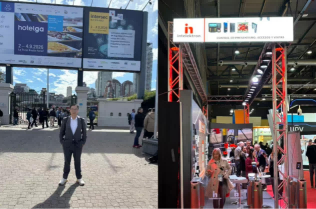
Intersec Buenos Aires is the largest security trade event in Argentina, covering electronic security, fire protection, industrial safety, and personal protective equipment. This year's show had a noticeably different energy compared with a few years ago, and our manager at ZOJE picked up on it immediately. The booths that drew the biggest crowds were not the ones showing generic CCTV cameras or basic alarm panels. They were the ones demonstrating integrated solutions — a camera that reads a license plate and opens a barrier in one motion, a pedestrian gate that verifies a face and lets someone through without a card, a software platform that pulls both vehicle and pedestrian data into a single dashboard.
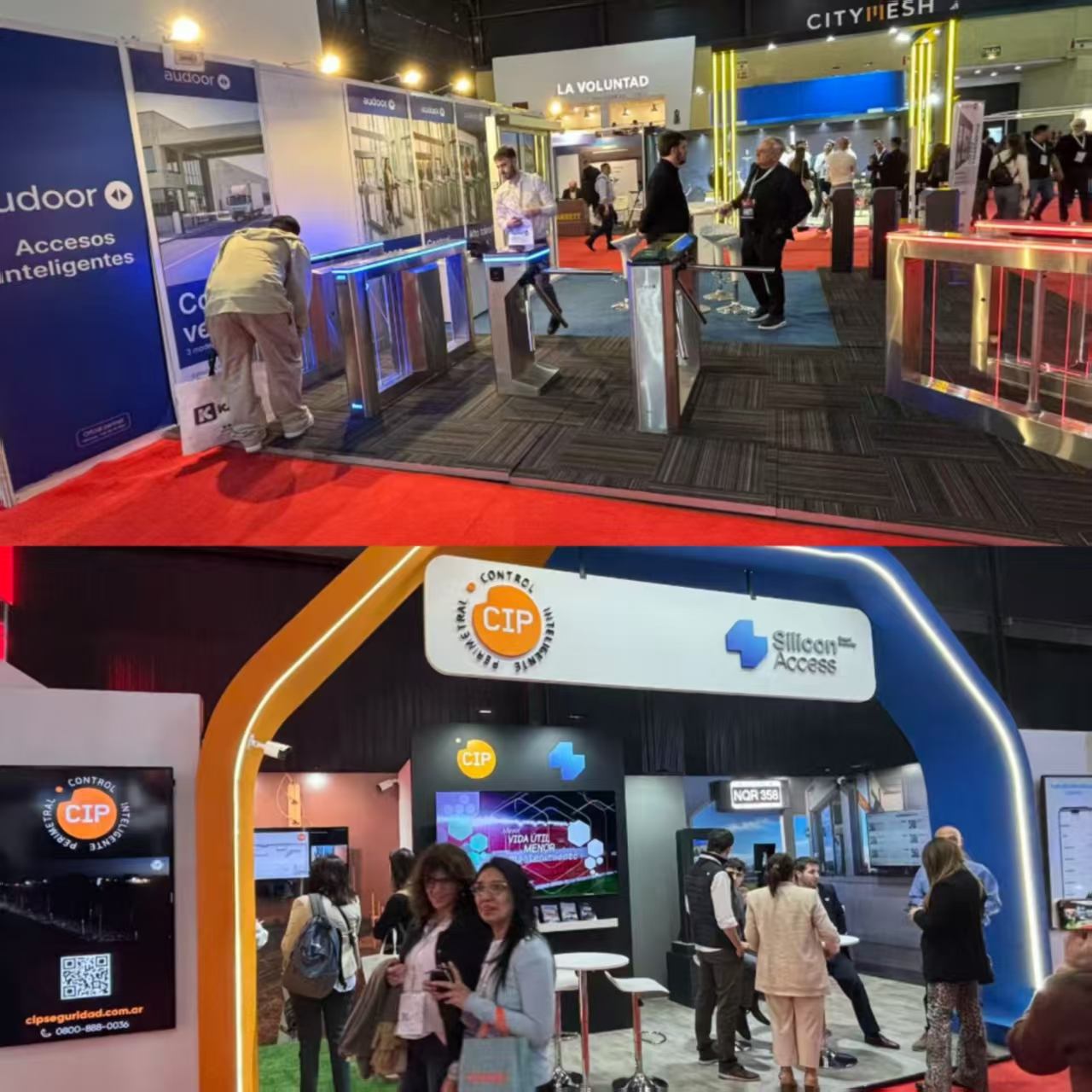
One local distributor was running a live ANPR parking system demo with a Spanish-language interface, and a group of parking operators was gathered around it asking about offline capability and local plate format support. At another booth, an access control manufacturer was showing a speed turnstile gate with built-in biometric readers, and the conversation was all about whether the unit could handle the high throughput of a corporate lobby during morning rush hour. These were not theoretical discussions. These were buyers trying to solve real problems on real sites.
The parking sector in Argentina has changed quickly over the past three years. For a long time, most commercial parking lots relied on paper tickets and manual cash collection. That model is now being replaced, and the ANPR parking system is at the center of that shift. Market research puts the Argentina parking management market at a compound annual growth rate of roughly 12 percent through the end of the decade, which is one of the faster growth rates in the region.
There are several reasons for this. First, urban congestion in Buenos Aires and other major cities has made efficient parking management a practical necessity, not a luxury. Drivers do not want to stop and take a ticket, and parking operators do not want to staff a booth 24 hours a day. An ANPR parking system solves both problems by recognizing the plate at entry, recording the time, and charging the registered account automatically at exit. No ticket, no cash, no attendant.
Second, the technology has become more affordable and more reliable. Earlier generations of plate recognition required a dedicated server room and constant network connectivity, which made them expensive to install and risky to operate in a market where internet outages are not uncommon. The current generation of ANPR parking system products runs recognition on the camera itself, stores the white list locally, and opens the barrier through a direct relay output. If the network goes down, the gate keeps working. That single change has made the technology viable for a much wider range of sites.
Third, local integrators have learned how to sell it. A few years ago, a customer had to ask specifically for plate recognition. Now, integrators lead with it as the default option for any new parking project, because it reduces labor costs for the operator and creates a recurring software revenue stream for the installer. We heard this from multiple distributors at the show: the ANPR parking system is no longer a premium upsell. It is the standard specification. This is a trend ZOJE has been watching closely as we develop our own parking product line.
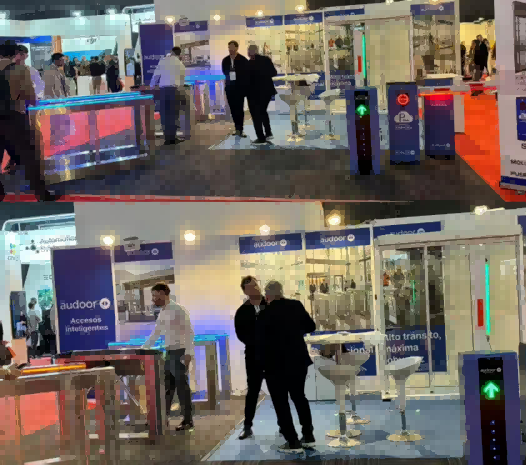
On the pedestrian side, physical access barriers are going through a similar transition. Argentina's access control market is growing at roughly 9 percent annually, and within that market, pedestrian barriers are one of the fastest-growing segments. South America as a whole accounts for about 12 percent of global turnstile gate demand, and Argentina is the second-largest market in the region after Brazil.
What is driving this? The short answer is that organizations are taking perimeter security more seriously. After years of relying on receptionists and sign-in sheets, corporate offices, government buildings, factories, and residential communities are installing physical barriers that actually prevent unauthorized entry. A receptionist can be distracted or overwhelmed. A turnstile gate cannot. It only opens when a valid credential is presented, and it only lets one person through at a time.
The type of product being specified is also changing. Basic tripod turnstiles still sell well for budget projects, but the fastest-growing segment is the speed gate — the glass-wing turnstile gate that opens in half a second and looks clean enough for a modern office lobby. Several booths at Intersec were demonstrating these units with integrated face recognition terminals, and the interest was strong. Buyers want security, but they also want something that does not look like a prison entrance. The speed turnstile gate hits that balance.
Biometric integration is another major trend. Argentina has a relatively high adoption rate of facial recognition in public services, and that familiarity is spilling over into commercial access control. More and more projects are specifying a turnstile gate with a built-in face reader rather than a card reader, because employees forget cards but they never forget their faces. For high-security sites such as data centers and government facilities, full-height units are still the preferred choice, because they prevent climbing and tailgating entirely. ZOJE's own full-height turnstile line was designed specifically for these types of high-security environments.
At ZOJE, we value these conversations because they tell us what the market needs before the market can articulate it clearly. Two themes came up repeatedly. The first theme was integration. Nobody wants to buy a standalone ANPR parking system from one vendor and a standalone turnstile gatefrom another and then pay a third party to make them talk to each other. Customers want a unified platform where vehicle access and pedestrian access are managed through the same software, with the same user database and the same reporting interface. This is a real opportunity for manufacturers that can offer both product lines with a common control platform.
The second theme was localization. Spanish-language software is not optional — it is a requirement. Local plate format support is essential, because Argentine license plates have their own format and font. Local technical support and spare parts availability are deciding factors in which brand a distributor chooses to carry. A product that works perfectly in Asia but has no Spanish interface and no local support will not sell in Argentina, no matter how good the specifications are.
At ZOJE, we came away from Intersec Buenos Aires with a clear picture. The Argentine security market is no longer a price-driven market where the cheapest product wins. It is becoming a solution-driven market where buyers care about reliability, integration, local support, and total cost of ownership. The ANPR parking system and the turnstile gate are the two product categories best positioned to benefit from that shift, because they directly address the two biggest pain points facility managers face: controlling vehicle access and controlling pedestrian access.
ZOJE already manufactures both parking equipment and pedestrian access gates, and we have been working on integrating them into a unified management system. The conversations in Buenos Aires confirmed that this is the direction the market is moving, and we intend to be ready for it. ZOJE would like to thank the exhibitors and distributors who took the time to speak with our manager at the show. The insights we gathered will directly inform our product roadmap and our market strategy for Argentina and the wider Latin American region.