Turnstile Gates at Rail Stations: Verification, Throughput, and Fare Data
A turnstile gate at a high-speed rail station is not a standalone device. It is the point where the station's automatic fare collection system meets the passenger, and most of the intelligence sits behind it rather than inside it. The gate collects the credential, sends the record to the ticketing database, receives a decision, and either opens the lane or holds it closed. Everything a passenger experiences at the barrier is the last step of a process that started when the ticket was bought.
That position in the system explains why the hardware is specified the way it is. The station is split into a paid area and a public area, and the turnstile gate is the boundary between them. A passenger who has not bought a ticket cannot reach the platform, a passenger holding a ticket for a different train cannot pass at the wrong gate, and a passenger who has already used the ticket cannot use it twice. For high-speed rail, where tickets are tied to a named passenger, the check is stricter than a simple valid or invalid test: the identity document, the ticket record, and the face have to agree, and the train and the time window have to match as well. ZOJE specifies the barrier for that boundary role, because a lane that merely marks the line without holding it lets the wrong passenger through.
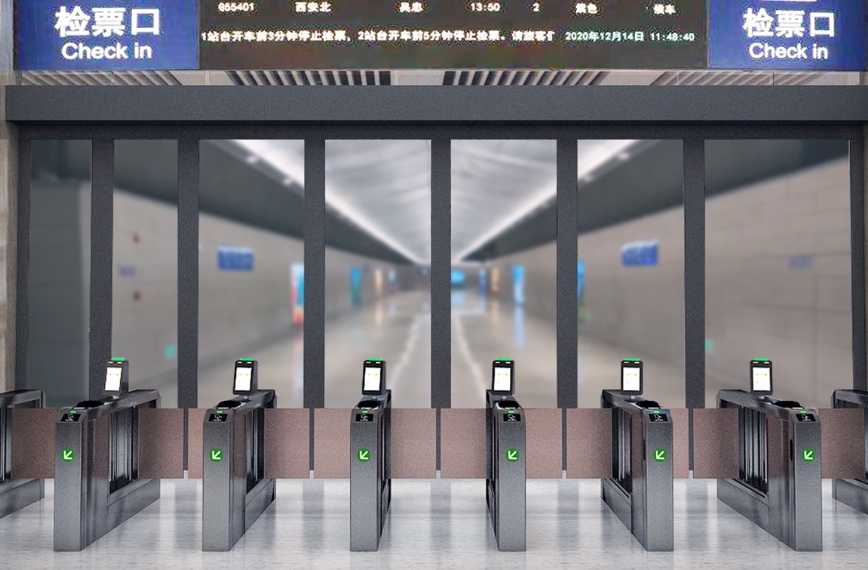
The gates stand at four kinds of position, and each one runs a different rule. A turnstile gate at the station entrance confirms that the passenger has a valid ticket for a train departing within the allowed window. At the waiting hall gate, the lane validates the ticket again as the passenger enters the boarding area, close to the departure time. At the exit, the lane closes the record and marks the journey as completed. At the platform link, the lane controls the direction of movement and stops a passenger from reversing into a boarding area that is already closed. A single station typically runs the same turnstile gate model across these points, with the rule set changed at the software level rather than the hardware level.
The hardware inside the cabinet is a package of modules rather than one mechanism. The ticket reader handles the QR code or the electronic ticket on a phone. The document reader handles the ID card and, in cross-border or international terminals, the passport. The camera handles face comparison. An array of infrared sensors covers the passage and counts the bodies inside it. The movement combines the clutch, the reducer, the motor, and the encoder into one unit, and the cabinet carries the collision-resistant barrier that the passenger actually touches. Inside the turnstile gate, a controller PC runs the local logic and the network module carries the record to the station system. ZOJE assembles the movement as a single cartridge, which keeps the shaft, the clutch, and the encoder aligned and removes the misalignment that shortens the life of a copied mechanism. Newer lanes add voice prompts, self-diagnosis, and status lighting, which matter more than they sound when a station runs twenty lanes and one of them stops responding.
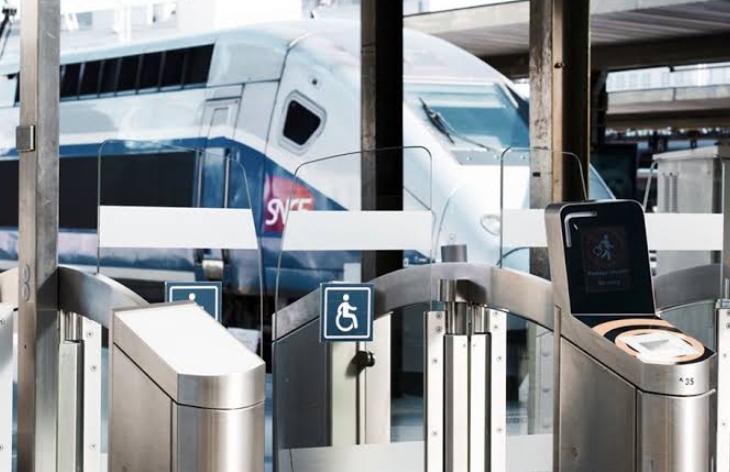
The working sequence takes a fraction of a second. The passenger presents a document, a phone, or a face, and the lane reads what it can and asks the passenger for the rest if the record is incomplete. The collected data goes to the ticketing database, which checks three things: that the person matches the document, that the ticket is valid for this station and this train, and that the ticket has not already been checked. A pass releases the barrier, the voice prompt confirms the lane, and the status light turns green. A failure keeps the barrier locked and shows the reason, which is usually one of four: the ticket is for another train, the ticket has expired, the face does not match the document, or the record was already used at another gate. ZOJE sets the lane to name the failure on the local display, so the passenger steps aside to the staffed window without holding up the queue behind.
The infrared sensors do a second job that is easy to overlook. They watch the passage while the barrier is open, so the lane stops closing on a passenger who is still inside, and they detect a second body following the first, which is the tailgating case that a single-door turnstile gate cannot prevent on its own. When the passage clears, the lane resets and waits for the next credential. If the power fails, the barrier releases automatically so the lane becomes a free exit rather than a trap, and when power returns the controller runs a self-check before it accepts passengers again.
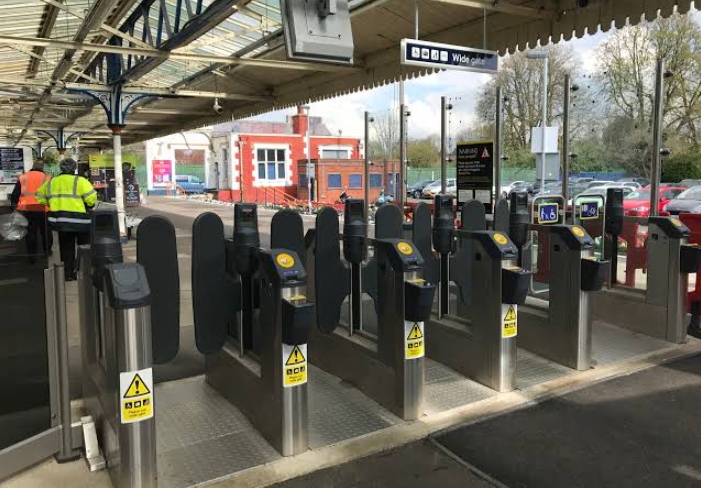
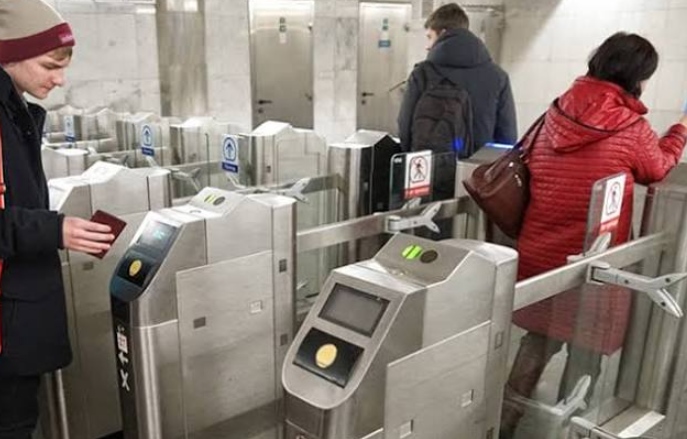
Two gate types cover most of the traffic at a high-speed station, and the difference is physical rather than cosmetic. The flap turnstile gate is the compact type, with wings of tempered glass or a flexible material that retract into the cabinet. It suits the entrance and exit lanes where the volume is highest, because the wings move quickly, the cabinet is narrow, and the cushioning absorbs the contact when a passenger with a suitcase clips the wing. The swing type, sometimes described as a paddle or speed gate, uses standing door panels that open wider and leave a broader passage. It suits the business-class lane, the assisted-passenger lane, and the link after the security check, where a wheelchair, a stroller, or a large suitcase has to pass without being angled through a narrow gap. The swing lane also tends to carry a higher verification specification, because the passenger group using it expects less friction at the barrier. ZOJE builds the swing lane with a wider cabinet base so the panels have room to open without the frame flexing, which matters when a suitcase is dragged through at an angle.
The selection question is therefore not which type is better but which type belongs at which lane. A station with a high commuter share puts flap lanes at the main entrance and exit, and reserves a small number of wide swing lanes for the passenger groups that need them. ZOJE builds both types around the same control platform, so a station can mix the two without running two separate management systems. The passage width is set per lane, at 600 millimeters for a standard flap lane and up to 900 or more for the wide lane, and the wing material follows the specification: tempered glass where visibility matters, a softer material where contact is frequent.
The functional side is what the operator evaluates after the hardware is installed. Verification is the triple check of document, electronic ticket, and face, which is the rule that high-speed rail actually runs. Throughput is the second measure: a lane releases in well under a second, and a bank of lanes running in parallel clears a holiday crowd faster than any manual check could. Protection is the third: infrared anti-clamp, collision reset, tailgating detection, self-diagnosis, and the fail-open behavior on power loss are all part of the standard configuration rather than options. Data is the fourth, and the one that changes how the station is run. Every passage through the turnstile gate is written back to the ticketing system with the time, the lane, and the result, so the station office can see the arrival pattern by hour, the boarding progress by gate, and the exit flow after a train arrives. ZOJE sets the reporting to RS485 or TCP-IP, and the interval is agreed with the station's AFC integrator so the records land in the format the platform already uses. That data feeds train scheduling, staff allocation, and crowd control on the platform.
The turnstile gate at a high-speed station is judged on two things that a showroom cannot demonstrate: how well it talks to the fare collection system, and how it holds up over a year of twenty-hour operation. ZOJE supplies the flap and swing lanes, the control platform, and the interface work that connects them to the station system, with the passage width, the reader set, and the lane count confirmed against the station's peak arrival pattern before production.