How Does a Full Height Turnstile Connect to a Site's Labor Registration System
Construction projects rarely fail a labor registration inspection because the gate was missing. They fail because the gate and the registration system were never connected, so the records at the entrance do not match the files at the labor office, and nobody can produce a trail when an inspector asks for one. That is the practical reason the full height turnstile has become the standard entrance device on registered sites: it is the point where a worker's identity, the live verification, and the attendance record meet in one place.
Labor registration rules have tightened year by year, and the inspection is no longer satisfied by a worker list kept in a folder. The site is expected to show that every person who entered was registered, that the person who entered is the person on the file, and that the record of the entry survives long enough to be reviewed. A swing gate or a tripod turnstile does not meet that standard on an open construction site. The swing gate can be pushed, the tripod arms can be climbed over, and neither one can tell whether the person who presented the card is the person holding it. The full height turnstile closes the first gap with a full enclosure and the second one with biometric verification. That is why it appears in the specification of projects that expect to be audited, and why a cheaper gate at the same lane usually ends up being replaced within a year. The system that solves the requirement has two halves. The back end is the site's labor registration platform, which holds worker files, labor contract records, crew assignments, and the reporting function that sends data to the local construction authority. The front end is the full height turnstile, which stands at the entrance and decides who passes. The two halves exchange data over a standard API or the Wiegand protocol, so permissions move down to the gate and passage records move back up to the system without anyone retyping them. ZOJE builds the full height turnstile to sit inside that loop, with the interface configured before delivery rather than after the site has already opened.
The registration step comes first. A site administrator enters each worker's ID number, a face image, the trade, the crew, and the labor contract details into the platform, the file is reviewed, and it is reported to the local regulator in the required format. A worker who is not registered never receives a permission, which means the gate has nothing to verify and the person cannot enter. This is the part of the process that project managers underestimate, because a file with a missing photo or an expired contract will block a worker at the gate on the first morning, and the fix sits with the administrator rather than with the hardware.
The permission download is the second step. Once a file is approved, the platform pushes the face template, the allowed time window, and the lane permission down to the full height turnstile in a batch. No one has to stand at the gate and enroll workers one by one. ZOJE configures the gate to accept the batch structure the platform uses, and the same download can carry different rules for different groups: permanent site staff on the full window, management and engineers on a wider window, and temporary visitors on a single-day pass that expires without further action.
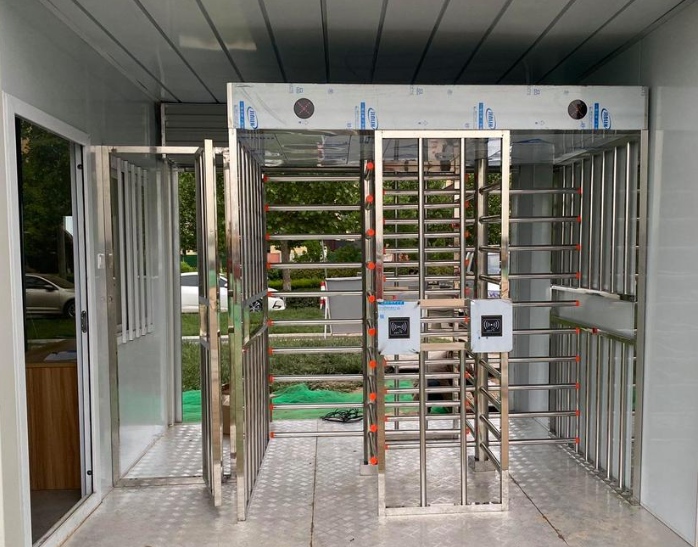
The verification at the gate is where the physical and the digital parts meet. A worker presents a face to the terminal, the terminal performs a liveness check to reject a photo or a video replay, and the match is sent to the controller. A pass turns the rotor of the full height turnstile and the worker walks through; a failed match or an unregistered face keeps the rotor locked and triggers the local sound and light alarm. The camera at the lane captures the passage, so the image, the face record, and the time are stored as one entry rather than three separate logs. ZOJE supplies the lane with the reader interface that the site's terminal needs, whether that terminal is a face unit, a card reader, or a combination of both.
The return path is the part that makes an inspection go smoothly. Every entry and exit, the captured image, and the timestamp go back to the registration platform, which builds the attendance ledger automatically. The data stays on the local server and is uploaded to the regulator on the schedule the project requires. When an inspector asks for a worker's record for a given week, the answer is a filtered query rather than a search through paper. ZOJE sets the gate to report through RS485 or TCP-IP, and the reporting interval is agreed with the site's IT contact so the records arrive in the format the platform expects.
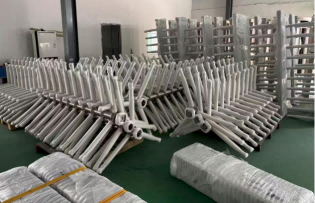
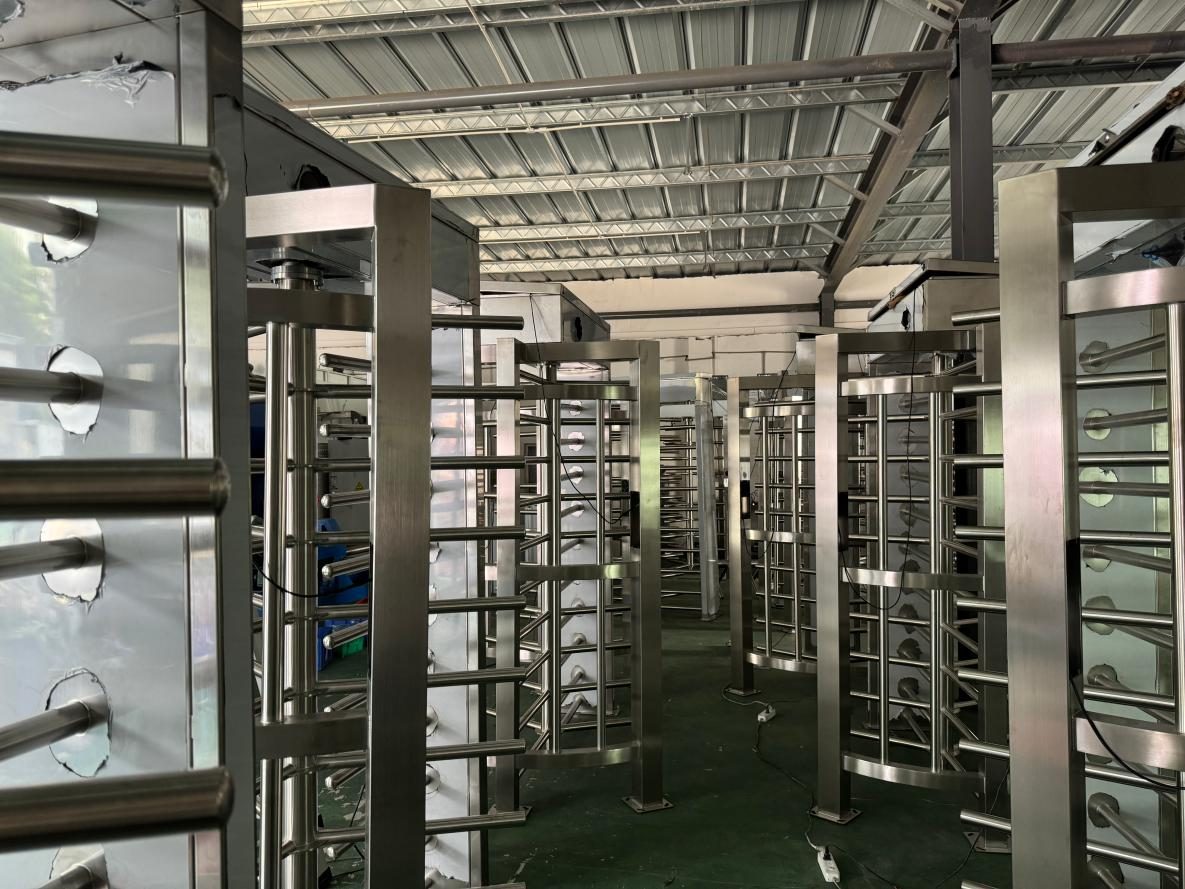
The hardware itself is chosen for the site rather than for a lobby. A full height turnstile encloses the passage with a rotor and a frame that leaves no gap to climb through and no space to duck under, which matters on an open site where the perimeter is long and the guard post is far away. ZOJE builds the Z2004 at 1500 by 1240 by 2250 millimeters, in 304 stainless steel with 316 available for corrosive ground or coastal projects, with a 600-millimeter passage that can be widened for carts and wheelchair access. The unlock time is 0.2 seconds, throughput is about 35 people per minute per lane, and the drive is either a semi-automatic solenoid or a fully automatic brush, brushless, or servo unit for quieter running and a longer service interval.
The gate also has to suit the reality of a construction entrance. Workers arrive in a compressed window before the shift and leave in another one after it, so the lane count has to be set for the peak rather than the average, and a dual-channel cabinet is a space-efficient way to add capacity without widening the entrance. The cabinet can be shipped fully welded or disassembled, which matters when the site access road cannot take a large vehicle. A single cabinet can run one lane or two, and ZOJE confirms the configuration against the peak headcount before production.
Biometric verification on a site has its own practical limits, and the terminal selection should account for them. A worker in a hard hat and dust mask presents a partly covered face, the morning sun comes in at a low angle across the lane, and the hands holding a tool bag are not free to press a fingerprint sensor. A face terminal with fill light and a liveness algorithm handles those conditions better than a camera module built for an indoor lobby, and the enrollment photo taken at the office has to match the conditions at the gate. ZOJE works through those details with the integrator, because a terminal that fails on the first rainy morning will be bypassed by the guard within a week. The full height turnstile also carries the reader housing that shelters the lens, which is a small detail until the lane stands in the open for a season.
The registration value extends past entry control. The same records that satisfy the inspector also feed attendance for payroll and for the subcontractor's monthly settlement, and a site that already runs a labor platform can use the gate data as the attendance source instead of a separate clock-in system. That removes one device from the entrance and one reconciliation step from the office. ZOJE keeps the passage records in a format the platform can export, so the link to payroll is a report rather than a rebuild.
The pattern is now common on standardized projects: the face-recognition full height turnstile and the labor registration platform are specified together, because either one alone leaves a gap. A gate without a platform verifies nobody against a file, and a platform without an enforcement device records hours that nobody can prove. ZOJE supplies the hardware, the interface configuration, and the integration support that connects the two, and the package is confirmed against the platform the project already uses before the order is placed.