How Does ZOJE Test a Full Height Turnstile Solenoid Valve for One Million Cycles?
For an access control product, reliability is often decided by parts that most users never see. The stainless-steel frame may define the appearance, but the internal locking components inside each Full Height Turnstile determine whether the entrance can release and lock correctly, day after day. This is why ZOJE has been carrying out a long-running life test on the solenoid valves prepared for a new production batch. The test has now completed more than 810,000 stable operating cycles, and our next target is one million cycles without a functional problem.
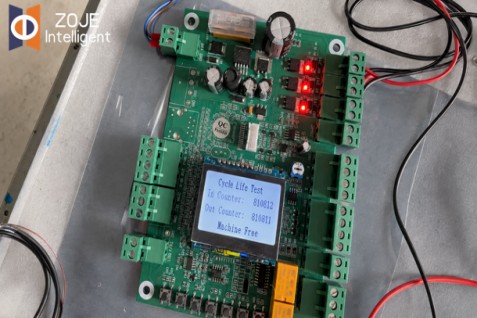
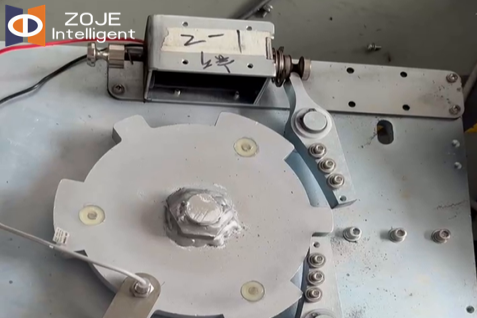
The test is not a display arranged only for a short factory video. A controller repeatedly sends operating commands to the locking mechanism, while the counter records each action. The test fixture includes the mechanical indexing section, two solenoid valves, wiring, and the control board used to drive and monitor the cycle. Each command asks the mechanism to perform the same basic release-and-return action required during normal entrance operation. By repeating this process continuously, we can observe how the component behaves after far more operations than a normal short inspection would cover.
In a Full Height Turnstile, the solenoid valve is part of the mechanism that controls whether the rotor can move in an authorized direction. When a valid signal is received from a card reader, biometric terminal, QR scanner, ticketing system, or another access controller, the mechanism releases according to the programmed logic. After the passage is completed, the rotor returns to the locked condition. This sequence may happen hundreds of times in one working day, so stable movement is more important than an impressive result from a few demonstrations.
At the current stage, the test counter has passed 810,000 cycles and the Full Height Turnstile mechanism continues to operate normally. ZOJE technicians are allowing the setup to keep running toward the one-million-cycle target. During the process, the important questions are practical ones: Does the solenoid respond consistently? Does the mechanical part release and reset correctly? Is there unusual noise, sticking, delayed movement, or visible loosening? A life test is useful because small changes may appear only after repeated operation.
One million cycles is a clear engineering target, but customers usually want to understand what that number may mean at a real site. If an entrance operates 500 times per day, one million actions are equal to 2,000 days of use. That is approximately five and a half years of daily operation. This calculation provides a simple cycle-based reference for a Full Height Turnstile used at a factory, construction site, logistics center, staff entrance, or another controlled pedestrian access point.
The calculation should not be treated as an unconditional service-life guarantee. Actual operating life also depends on the environment, installation quality, supply voltage, traffic behavior, maintenance, temperature, dust, moisture, and the load placed on the mechanism. A site with 500 daily passages under clean indoor conditions is different from a busy outdoor entrance exposed to rain, dirt, and irregular use. ZOJE therefore uses the cycle figure as one piece of technical evidence rather than as a replacement for correct product selection and maintenance.
This distinction matters in the access control market. Buyers often compare housing material, lane dimensions, reader options, and purchase price, but the internal lock may receive less attention. Once the equipment is installed, however, a slow or inconsistent release can affect every user. A Full Height Turnstile is normally selected for locations that require firm physical control, and an unreliable locking action can quickly create queues, manual intervention, or unnecessary service work.
Long-cycle testing helps us examine performance beyond the normal production check. During standard assembly, each unit is inspected for frame alignment, rotor movement, locking position, direction control, indicator status, and connection with the selected access device. Those checks confirm that the finished product works before packing. The solenoid test answers a different question: can a key part continue performing the same action after hundreds of thousands of repetitions? ZOJE uses both types of inspection because correct assembly and component endurance address different risks.
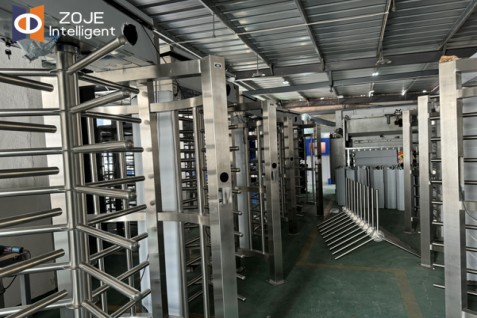
The current test also supports the production of the new batch now being assembled in our factory. Multiple stainless-steel units are moving through mechanical installation, wiring, adjustment, and inspection. Before a Full Height Turnstile is prepared for shipment, the rotor should turn evenly, the lock should engage in the correct position, and the operating direction should match the approved project settings. Testing the solenoid valves separately gives our production team additional information about the component used inside that system.
For system integrators, predictable lock response makes commissioning easier. The gate must work with the access controller as one complete process: receive the authorization signal, release the correct direction, allow one person to pass, and return to a secure state. Timing problems can be difficult to diagnose when hardware, wiring, reader settings, and software are installed together on site. A stable Full Height Turnstile mechanism reduces one source of uncertainty during integration.
The test is also relevant to applications with long operating hours. Construction projects may have concentrated shift changes in the morning and evening. Manufacturing plants may run two or three shifts. Logistics facilities can remain active around the clock, while stadium service entrances may experience short periods of very frequent use. In each case, the daily cycle count is different. ZOJE encourages project partners to estimate expected traffic before choosing the configuration, because usage frequency affects maintenance planning and the most suitable entrance layout.
Routine maintenance remains necessary even when a component performs well in a life test. Installers should keep the mechanism clean, check fasteners and wiring, observe the locking action, and address unusual sound or resistance early. The frame must also remain level, since poor alignment can place extra stress on moving parts. A Full Height Turnstile should be treated as working access equipment rather than a structure that can be installed and forgotten.
For customers, the main message is straightforward. A Full Height Turnstile must do more than look strong when it leaves the factory. Its internal parts need to keep releasing, locking, and resetting through repeated daily use. The current 810,000-cycle result is an encouraging stage, but the work is not finished. ZOJE will keep the equipment running toward one million cycles and use the findings to support practical, dependable pedestrian access products.