How Do ZOJE Swing Turnstiles Solve 2 Major Retail Store Problems
Retail shrink costs bookstores and small shops a lot more than most owners admit out loud. A paperback slipped into a bag, a cosmetics bottle hidden in a coat, a stationery set walked past an unstaffed exit — each incident looks small on its own, but it adds up to a double-digit percentage of inventory by the end of the year. The classic response has been to put an EAS antenna at the door and hope the alarm is enough. The honest problem with that approach is that an alarm only alerts staff. It does not stop the person from leaving. ZOJE's answer to this gap is a retail-grade swing turnstile gate that combines the EAS detection loop with a physical door, so an alarm and a block happen at the same point in space.
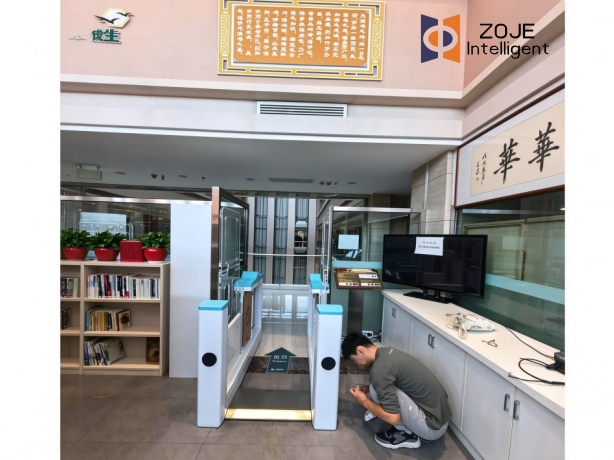
The economics of retail loss have pushed store operators to rethink the exit. A dedicated security guard at the door costs a fixed salary, training, and turnover. A camera-only system records what happened but cannot prevent it. A conventional EAS pedestal beeps when a tagged product passes, but the tagged product is already outside the door by the time the sound reaches the staff. A swing turnstile gate addresses this by removing the "walk past" option altogether. A shopper leaves the shop only one person at a time, through a controlled lane, and the EAS loop inside the same cabinet checks every bag and coat as the person passes through.
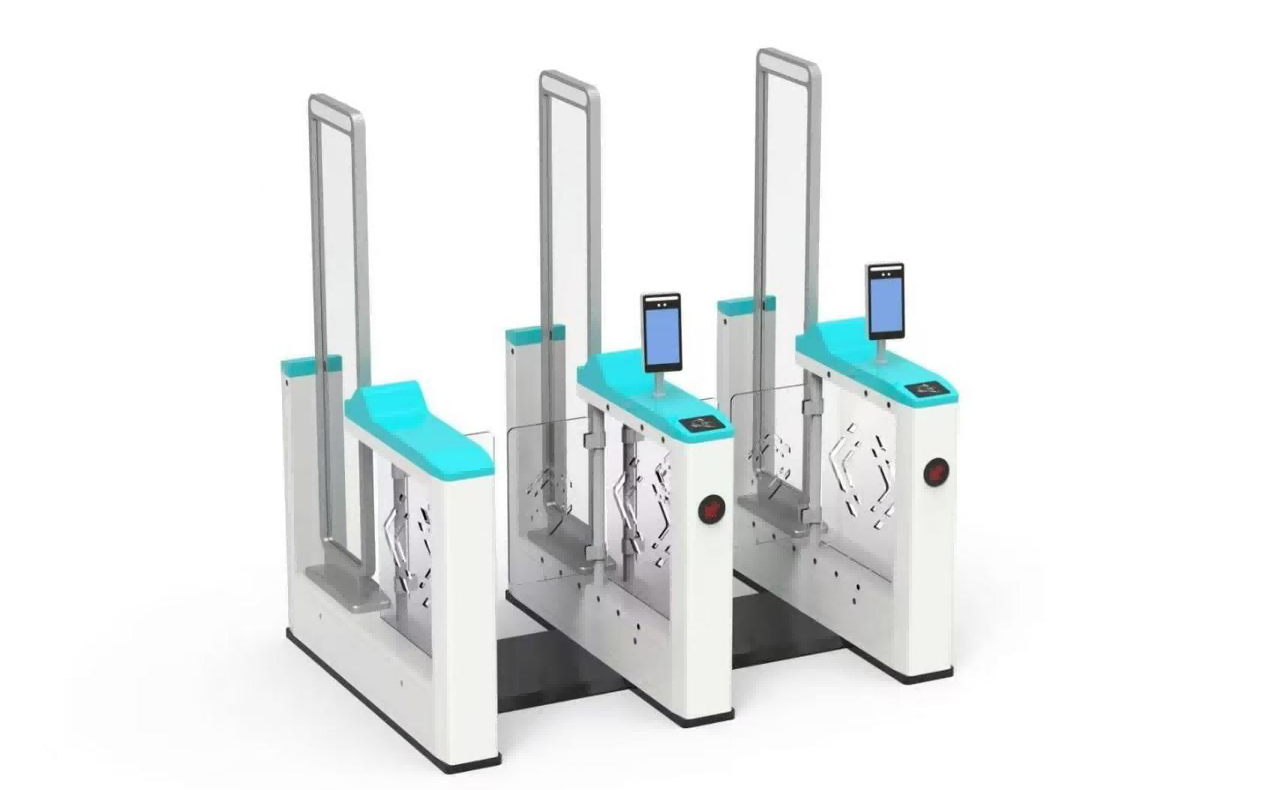
The combination is the point. A standalone turnstile at a bookstore exit would control the flow of people, but it would not know whether a book inside a bag has been paid for. A standalone EAS antenna would detect the tagged book, but it would not physically stop the shopper. Fitting both devices side by side wastes floor space and creates two separate maintenance points. ZOJE's swing turnstile gate puts the antenna loop, the reader, and the swinging acrylic door into one slim cabinet, so a single installation does both jobs. The cabinet occupies roughly the same footprint as a standard retail turnstile, which means it drops into an existing store entrance without a rebuild.
The customer experience matters as much as the loss-prevention logic, because a retail exit that frustrates paying shoppers hurts sales. The swing turnstile gate opens its acrylic wings quickly after a valid exit is registered, and the passage is wide enough for a bag, a backpack, or a small rolling case. Direction is set to one-way out, which matches how most bookstores and convenience stores organize their flow: customers enter freely, they leave through the controlled lane. The optical sensors detect a person approaching and prevent the door from closing on someone who has not finished passing. In normal operation, a shopper walks through without stopping, which keeps the checkout queue short even on a busy Saturday. This is the trade-off the swing turnstile gate is built to balance: tight control without turning a shopping trip into an airport checkpoint.
On a ZOJE swing turnstile gate, when the EAS loop detects an unpaid tag, the wing does not open. Instead, the unit holds the wing closed and triggers the audio-visual alert, so staff at the counter can step over and check the bag while the person is still inside the store. This is the difference between an alarm that fires at the door and a physical hold at the exit. The stolen item never leaves the building, and the incident is resolved without a chase through the parking lot.
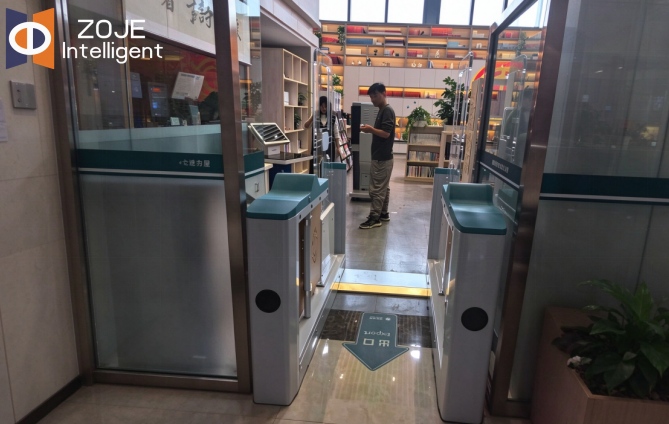
The housing is built for a retail environment rather than a corporate lobby. The standard finish is a matte painted steel cabinet that resists fingerprints and wipes clean, and the top cap color can be matched to the store's brand — the ZOJE units installed in recent bookstore projects carry a custom teal top on a white body, which blends with the interior fit-out instead of looking like security equipment bolted on after the fact. The transparent acrylic wings let shoppers see through the exit, which keeps the space feeling open. An optional LED light strip along the wing edge adds a visual direction cue and fits the lighting design of a modern store.
The swing turnstile gate runs on simple logic that store staff can manage without a dedicated IT person. ZOJE builds the unit to connect to the store's EAS system through a standard interface, and the door logic is set at the time of installation: one-way exit, free entry, automatic reset after each passage. Power comes from a standard wall outlet. The drive is designed for retail duty cycles — not the 24-hour load of a transit station, but the 10-to-12-hour daily use of a shop, which means the motor and the bearings are sized for that workload rather than overbuilt for a stadium.
For a bookstore, a stationer, a cosmetics counter, or a small format retail chain, the question is not whether shrink exists — it does. The question is whether the exit stops it or only reports it. A swing turnstile gate built around the EAS loop changes the math: the loss rate drops because unpaid merchandise cannot leave through the control