What is a Turnstile Cloud Platform?
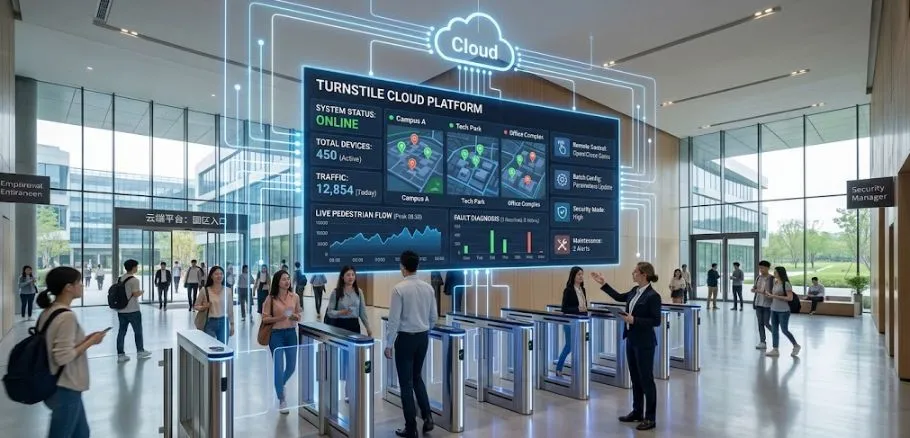
A Turnstile Cloud Platform is a pedestrian access management system built upon a cloud-based architecture. Through network connectivity, it enables the remote control, centralized management, and intelligent operation and maintenance of turnstile devices. It integrates traditional turnstile devices—which are typically scattered across various physical locations—into a single intelligent system capable of real-time monitoring, unified configuration, and remote administration.
What are the Issues with Traditional Management Methods?
In practical project scenarios, traditional turnstile management often faces several challenges: devices are dispersed and difficult to control centrally; parameter adjustments require on-site manual intervention, resulting in low efficiency; fault response times are slow; maintenance costs are high; there is a lack of unified standards across multiple projects; and providing technical support for overseas projects is difficult. These issues become increasingly amplified as project scales expand; therefore, transitioning from a "passive maintenance" model to an "active management" model represents the optimal choice for turnstile management.
What are the Core Functions of a Turnstile Cloud Platform?
1. Remote Control: On-Demand Management
The cloud platform supports real-time remote operations for turnstiles. Examples include opening and closing gates, switching between "normally open" and "normally closed" modes, adjusting temporary access policies, and activating rapid-response modes during peak pedestrian traffic periods. This is particularly well-suited for large-scale projects such as industrial parks, airports and subway systems, and large-scale smart buildings.
2. Remote Parameter Configuration: Batch Data Deployment
Through the Turnstile Cloud Platform, users can modify parameters online and deploy them in batches to multiple devices. These parameters include gate opening/closing times, passage speeds, infrared detection logic, anti-pinch sensitivity, access mode settings, and more. This capability simultaneously boosts operational efficiency and minimizes human error.
3. Online Fault Diagnosis: Proactive Early Warning
Traditional management methods typically require on-site inspection and manual repairs. However, with cloud-based management, operators can monitor turnstile status in real-time. The system automatically triggers an alarm whenever a fault occurs, and the cloud platform simultaneously logs all abnormal data. By enabling remote diagnosis and the resolution of certain faults, this approach significantly reduces device downtime.
4. Centralized Multi-Site Management
The Turnstile Cloud Platform management system provides users with unified management across multiple sites. All turnstile devices can be grouped for collective control, access permissions can be managed hierarchically, and data can be managed at an enterprise-wide level. This helps organizations achieve standardized operations and maintenance, as well as centralized control.
5. Data Monitoring and Analysis
The Turnstile Cloud Platform collects and analyzes various data points, including pedestrian traffic volume, the usage frequency of individual turnstiles, peak traffic periods, and fault records. This data can be utilized to optimize access strategies, enhance operational efficiency, and support informed management decision-making.
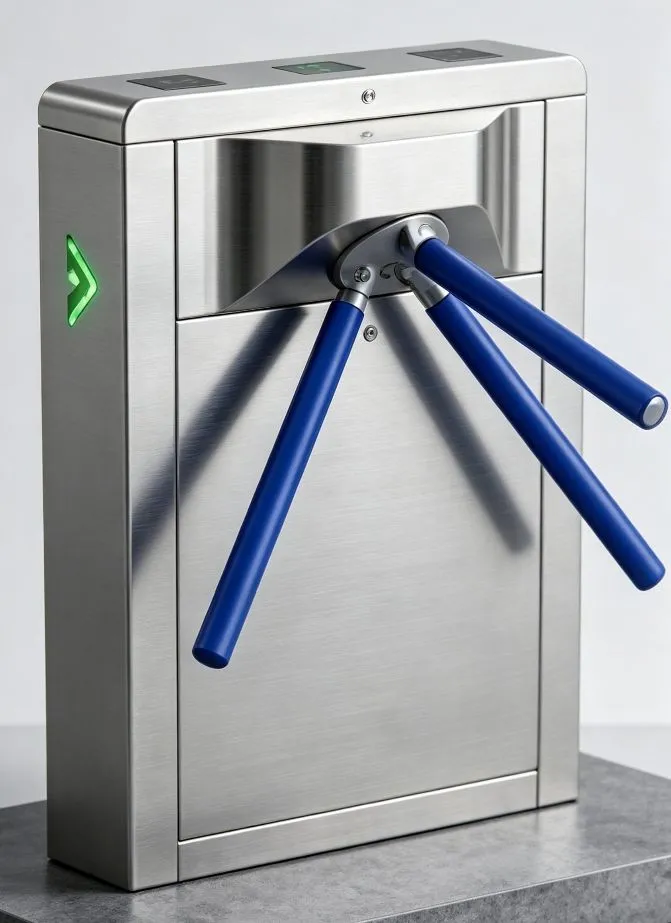
In practical projects, traditional turnstile management often faces the following challenges:
Reducing Maintenance Costs: Minimizing manual inspections and lowering the frequency of on-site maintenance.
Enhancing Operational Efficiency: Enabling centralized management, rapid response capabilities, and real-time adjustments.
Strengthening System Stability: Providing real-time monitoring and fault alerts to mitigate the risk of downtime.
Scalability and Flexibility: Supporting expansion across multiple projects, offering flexible configuration options, and facilitating standardized management. These very advantages represent the core issues that a cloud-based turnstile platform is designed to address and optimize.
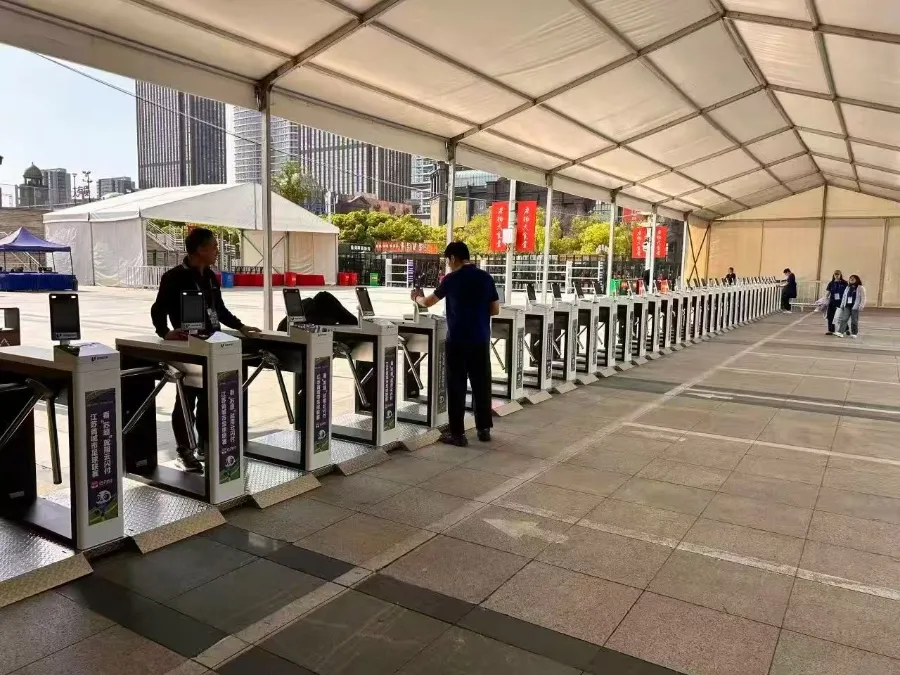
With the advancement of smart cities and smart campuses, cloud-based turnstile platforms are evolving in several key directions: AI-driven intelligent analytics, deep integration with contactless access systems, cloud-edge collaborative architectures, and data-driven operational optimization. In essence, these platforms are upgrading pedestrian access systems from mere "standalone devices" into sophisticated "intelligent management systems." For modern projects, this not only boosts operational and maintenance efficiency but also significantly enhances system stability and controllability.