Can Smart Parking Management Systems Completely Solve Urban Parking Challenges?
Smart parking management systems serve as the core technological foundation and systemic solution for addressing the urban parking dilemma. While they can efficiently alleviate parking chaos and enhance resource utilization, technology alone cannot completely resolve the complex challenge of urban parking. Through technological innovation and management upgrades, these systems optimize the allocation of parking resources and operational efficiency across multiple dimensions, thereby becoming a pivotal tool in the governance of urban static traffic.
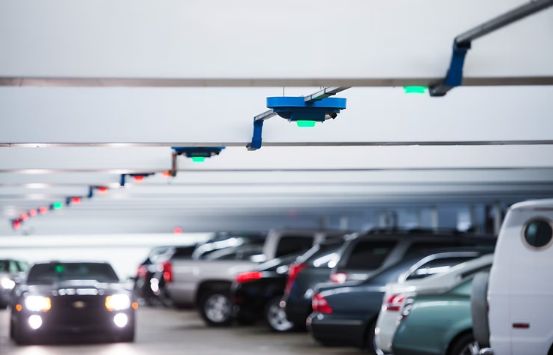
How do smart parking management systems address the various issues inherent in urban parking?
1. Revitalizing Existing Resources and Boosting Parking Space Turnover
At its core, a smart parking management system centers on the concept of shared parking spaces. It encourages space owners to make their idle spots available during off-peak hours, thereby facilitating staggered sharing and maximizing the utilization of existing parking inventory. Through precise on-site guidance systems, tiered regional navigation, and online reservation capabilities, the system directs vehicles to available spots quickly. This eliminates the wasted time typically spent searching for a space, significantly boosting the efficiency of parking space turnover. Furthermore, by leveraging big data analytics to forecast traffic flow trends, the system assists operators in scientifically optimizing scheduling and pricing strategies, ensuring that limited parking resources yield maximum value.
2. Upgrading Management Models: Enhanced Efficiency, Reduced Costs, and Lighter Workloads
By relying on cutting-edge technologies—such as automatic license plate recognition, ETC (Electronic Toll Collection), and contactless payment—the system enables vehicles to enter and exit rapidly without stopping, thereby completely resolving the problem of congestion at entry and exit points. A centralized cloud platform facilitates the unified management of parking facilities across multiple locations; combined with remote cloud-based operations, maintenance, and emergency response capabilities, this approach replaces traditional manned booths. Consequently, it effectively reduces labor costs, expands the scope of management coverage, and ensures that unmanned parking environments maintain the same high level of service efficiency.
3. Optimizing User Experience: Convenient, One-Stop Service
The system aggregates a wide array of payment methods—including online payments, bank card transactions, and cash payments—and supports both active and passive QR code scanning as well as offline payment options, thereby covering every conceivable payment scenario. It integrates the entire parking workflow into a seamless, all-in-one service—encompassing space search, reservation, navigation, payment, electronic invoicing, and vehicle locator functions. This provides a convenient, one-stop parking experience that comprehensively enhances driver satisfaction regarding their urban travel and parking needs.
4. Empowering Refined Operations and Expanding Revenue Channels
By leveraging user profiling data, the system enables precision marketing strategies—such as the distribution of electronic coupons—to enhance user engagement and drive increased commercial consumption within the facility's ecosystem. Through intelligent data analysis and vehicle movement monitoring, we efficiently recover unpaid fees, eliminate fee evasion, and effectively safeguard the legitimate revenue of operators.
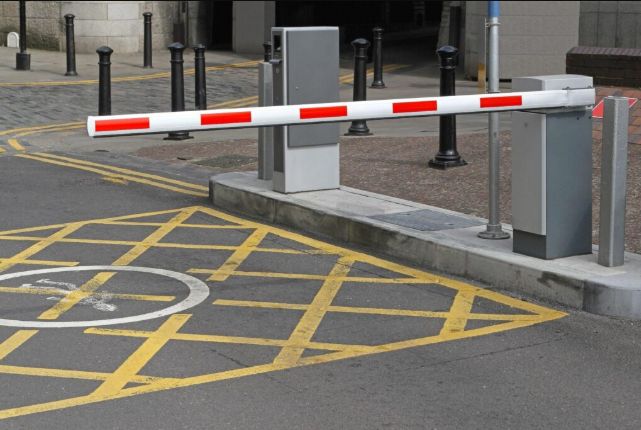
Why can't intelligent parking management systems completely resolve urban parking challenges?
1. Inability to overcome the bottleneck of total parking capacity:
The core function of a smart parking management system is to optimize existing resources, not to increase supply; it cannot directly create new physical parking spaces. In areas where the absolute supply of parking spaces is severely insufficient, the effectiveness of technological optimization is significantly diminished.
2. Reliance on top-level planning and multi-party collaboration:
City-wide governance of static traffic (parking) requires government leadership and coordination to achieve the integration of on-street and off-street parking, as well as cross-regional dispatching. This involves municipal planning, land policies, and the reconciliation of diverse stakeholder interests—tasks that extend far beyond the capabilities of a single enterprise's technology.
3. Implementation constrained by multiple real-world factors:
Some vehicle owners are slow to adopt new technologies; cultivating habits such as "contactless payment" and "reserved parking" requires a long-term process. Hardware retrofitting in older urban areas faces challenges such as complex environments, weak network infrastructure, and high investment costs. Human-related issues—such as the unauthorized occupation of spaces or "privileged parking"—require the support of management and law enforcement to be fully eradicated. Furthermore, the persistent barriers between parking spaces under different ownership structures continue to hinder practical implementation.
ZOJE is deeply committed to the smart parking sector, leveraging AI visual recognition, IoT, big data, and payment ecosystems as its core technological pillars to create end-to-end smart parking solutions. ZOJE’s intelligent parking management system encompasses a full suite of functions—including license plate recognition, contactless payment, parking guidance, and reverse vehicle search—achieving deep synergy between hardware and software. We provide customized solutions for smart campuses, transportation hubs, and commercial complexes, helping clients reduce costs, boost efficiency, and upgrade their service offerings. ZOJE has established an open platform to facilitate third-party integration, pioneering innovative models such as integrated "parking-and-charging" services and parking space sharing to drive the intelligent transformation of urban static traffic management.
Leveraging its independently developed cloud platform for intelligent parking management system, ZOJE has built a comprehensive "Smart Hardware + Platform + Operations" business ecosystem. This ecosystem encompasses a range of front-end hardware—including integrated license plate recognition units, automated boom barriers, and QR-code scanning terminals—and covers a full spectrum of application scenarios, from smart communities and smart cities to transportation hubs and office buildings. This infrastructure provides robust support for unmanned operations and highly refined management strategies.
So, can intelligent parking management systems truly and completely resolve the challenges of urban parking? Smart parking management systems can alleviate congestion, curb disorder, and remedy inefficiency, yet they cannot resolve the fundamental shortage of parking spaces; a comprehensive solution to urban parking challenges requires the concerted efforts of technology, urban planning, policy, and ecosystem-wide collaboration.
Previous:What is a Turnstile Cloud Platform?