Why Visitor Management Is Now Essential for Access Control .
1. The Hidden Costs of Manual Visitor Processing
Traditional visitor managemesnt models generate communication delays at multiple touchpoints. Upon arrival, visitors are required to complete a paper registry or manually input their data into an electronic device. Security personnel must verify credentials, contact the host, issue temporary visitor badges, and manually operate vehicle barriers or turnstiles. Each of these steps creates delays, and each step harbors inherent risks.
2. How Are Intelligent Systems Reshaping the Visitor Experience?
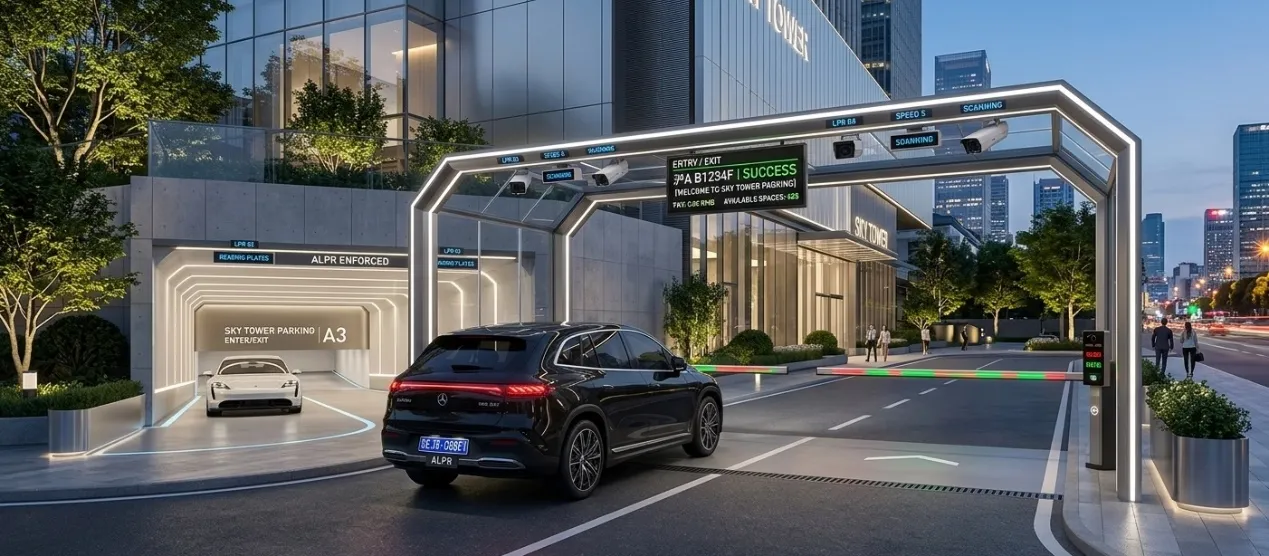
Modern visitor management models operate in a fundamentally different way. Rather than treating visitor access as a process distinct from vehicle entry control, they integrate both into a single, unified workflow.
Prior to their scheduled visit, visitors receive a pre-registration link via email or SMS. They simply need to submit their personal details—including their name, company affiliation, license plate number, purpose of visit, and estimated time of arrival. The system then automatically screens this information against various required verification protocols, such as blacklist checks, credential validation, or compliance reviews.
Once approved, the visitor receives a QR code or a digital pass. Simultaneously, the system automatically configures the settings for all relevant access points: the visitor's license plate number is temporarily added to the license plate recognition system's whitelist, and entry permissions are automatically configured with a corresponding valid time window.
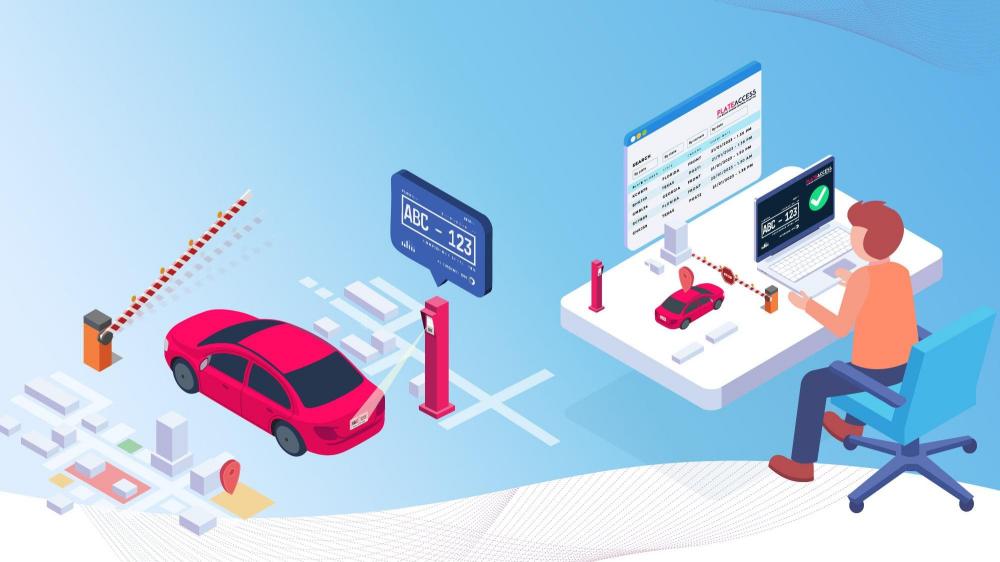
Upon the visitor's arrival at the site, license plate recognition(LPR) cameras automatically scan the license plate, cross-reference it with the pre-registered data, and automatically raise the entry barrier gate—a process often completed before the vehicle has even come to a complete stop. The entire processing sequence takes less than five seconds. There is no need for phone calls, manual verification, or waiting in line.
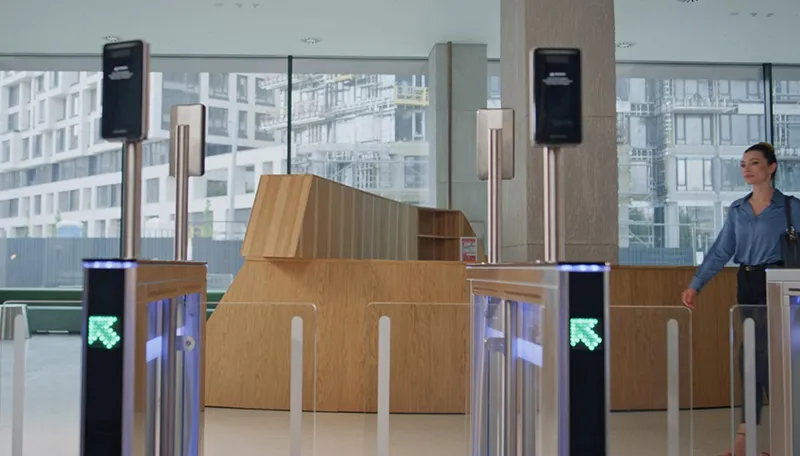
Once inside the facility, visitors can use the same digital credential to pass through designated access points or turnstiles to enter authorized areas. When visitors conclude their visit and depart, the system automatically revokes all their access privileges. Every interaction is automatically logged by the system, complete with timestamps and photographic records serving as verification evidence.
3. Where Automation Technology Creates Quantifiable Value
Efficiency gains are immediate and evident. However, the operational benefits they yield extend far beyond the superficial advantage of merely "opening doors faster."
When a visitor management system is deeply integrated with your facility's existing access control infrastructure, the system can automatically generate a comprehensive audit trail. You gain precise visibility into the detailed movements of every visitor—including their exact entry time, the specific areas they accessed, and their final departure time. If your industry mandates the retention of visitor records for security inspections, security audits, or regulatory compliance purposes, this data is securely stored in a searchable, report-ready format—rather than being scattered across paper logbooks or left to the fallible memory of security personnel.
Through the systematic enforcement of rules, security levels are significantly enhanced. While manual processes often rely on human judgment and vigilance, intelligent systems consistently and strictly enforce established protocols: expired credentials are automatically invalidated; visitors are prevented from entering unauthorized zones; and if a visitor overstays their allotted time, the system automatically triggers an alert. These are not merely theoretical capabilities on paper; rather, they represent the default behaviors that come into play when access control and visitor management systems operate in tandem as a fully integrated solution.
4. Integration is the Key to Achieving Exceptional Performance
The fundamental difference between a "Visitor Management System" and an "Integrated Access Control Solution" ultimately lies in how data flows.
Standalone visitor management software may be capable of tracking the movements of individuals currently on-site; however, if it cannot exchange data with your access turnstile gates, License Plate Recognition(LPR) cameras, and barrier gates, you are effectively still managing two separate, independent systems. In such a scenario, security personnel are forced to act as the "integration layer"—manually updating access permission lists and physically opening gates—thereby serving as the "bridge" between digital visitor records and physical access within the facility.
True integration means that your visitor database, LPR system, turnstile controllers, and credential readers can share information in real time. Once a visitor completes the registration process, their vehicle information is automatically converted into a "credential" granting access privileges; conversely, when a visitor completes their departure formalities, their corresponding access permissions are automatically revoked. In this way, the entire system is able to maintain and share a single, authoritative "source of truth" across all access points.
5. The True Capabilities Required of Modern Access Control Systems
The challenge facing facilities managers is not whether to implement visitor management, but rather whether their existing access control infrastructure is capable of providing it with adequate support.
Systems designed with vehicle barriers and vehicle identification operating as independent entities often struggle to effectively integrate visitor management workflows. In contrast, platforms built specifically for access control—which treat visitor management, License Plate Recognition (LPR), barrier control, and credential management as integral components of a unified access control ecosystem—offer a fundamentally different set of core capabilities.
This architectural distinction is critical when evaluating various solutions. If a vendor claims they can simply "bolt on visitor management capabilities" to existing infrastructure, the actual functionality they deliver may not be comparable to that of platforms designed from the ground up with deep, seamless integration of these various workflows.
Facilities that have achieved exceptional results—such as efficiency gains of up to 80%, significantly enhanced regulatory compliance, and comprehensively upgraded security postures—rely on systems that are not merely a patchwork of disparate visitor management and access control products. Instead, they utilize platforms that treat visitor management and access control as highly integrated core functions operating within a single, unified framework.
This represents the true benchmark for modern access control systems: they go beyond merely managing *who* is permitted to enter; they orchestrate *how* they enter, ensuring the entire process is efficient and seamless, while maintaining detailed and comprehensive records of every step along the way.