What Are the Different Access Control Modes for Sliding Turnstile Gates?
Sliding turnstile gates are a common type of ticket checking equipment in automatic ticket vending and inspection systems. Their purpose is to allow passage for pedestrians with valid cards and block unauthorized pedestrians, effectively identifying normal and illegal passage and reacting accordingly.
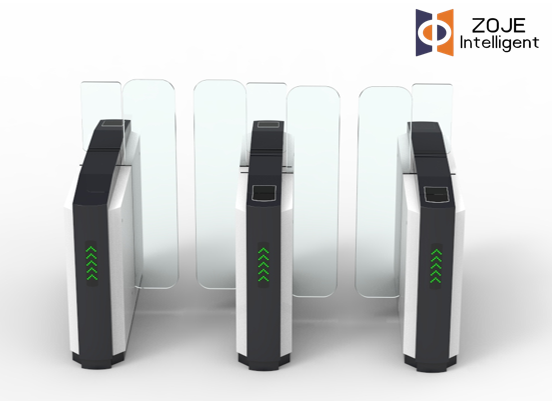
1. Normal Passage Identification:
a) The pedestrian is validly authorized outside the sliding turnstile gate channel, then the gate opens, the pedestrian passes quickly, and the gate closes.
b) Due to habit, the pedestrian enters the front of the sliding turnstile gate channel prematurely and stops moving forward, then is validly authorized, the gate opens, the pedestrian passes quickly, and the gate closes.
c) Multiple people pass continuously, and the number of valid authorizations equals the number of pedestrians. A certain distance is maintained between adjacent people. The sliding turnstile gate closes normally after all pedestrians have passed through the channel.
d) During valid authorized passage, if the pedestrian swings their arms, the sliding turnstile gate should still be able to correctly identify the passage without misjudgment.

2. Illegal Passage Identification:
a) An unauthorized pedestrian enters the channel and attempts to evade payment; an alarm should be triggered.
b) After valid authorization and the gate opens, if the pedestrian does not pass through the gate for a long time, a timeout alarm should be triggered.
c) After valid authorization and the gate opens, if someone enters in the opposite direction, an alarm should be triggered, and the gate should close to prevent reverse passage while ensuring personnel safety.
d) During a single authorization and normal passage through the gate channel, if an unauthorized person follows behind into the gate channel, an alarm should be triggered, and the gate should close to prevent tailgating while ensuring personnel safety.
With the continuous development and upgrading of technology, sliding turnstile gates can now meet more than just the basic access control objectives mentioned above. In complex and ever-changing real-world application scenarios, ZOJE's sliding turnstile gate system also demonstrates its stable and reliable comprehensive judgment capabilities, ensuring that it does not affect the passage experience of normal passengers while effectively preventing various fare evasion and illegal behaviors.
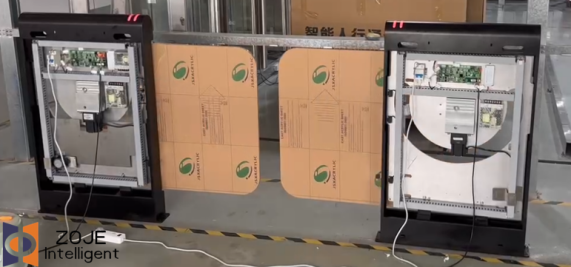
3. Complex Scenario Identification and Processing Requirements:
a) When pedestrians carry luggage, backpacks, or pull small suitcases through the gate, the system should be able to distinguish between the combination of "person" and "object," avoiding misidentifying personal belongings as a second passage target, thus preventing false alarms or incorrect gate closures.
b) When children or adults traveling with them, or individuals with limited mobility (such as the elderly or disabled), pass through the turnstiles, the system should appropriately extend the passage time, dynamically adjust the opening and closing strategy of the gates, and prevent misjudgments or the risk of people being trapped due to slow passage speed.
c) During peak hours with high pedestrian traffic, the system needs to have strong anti-interference capabilities to accurately match the number of authorized entries with the number of people passing through, even when people are in close proximity and their movements are continuous.
4. Safety and Reliability Requirements:
When controlling access, the sliding turnstile gate system must always prioritize personnel safety. If abnormal behavior or potential hazards are detected, measures such as reducing speed, stopping the closing process, or reopening the door should be taken to prevent injury to pedestrians. Simultaneously, the system must have comprehensive event logging and reporting functions to categorize and record normal access, unauthorized access, and abnormal situations, providing a basis for subsequent data analysis, operational management, and equipment maintenance.
5. System Collaboration and Scalability:
The sliding turnstile gates from ZOJE can connect with the ticketing system, monitoring system, and internal management platform to achieve real-time interaction of authorization information, alarms, and status. Through algorithm optimization and parameter configuration, the system can be flexibly adapted to different application scenarios, continuously improving recognition accuracy and overall operational efficiency.