Smart Access Turnstiles: Balancing Security and Convenience.
In the digital transformation, entrances and exits, as the first line of defense for spatial security, are undergoing a management upgrade, moving from "manual operation" to "intelligent control." Samrt access turnstiles, with their key advantages of accurate identification, dynamic protection, and efficient passage, overcome the traditional dilemma of balancing security and convenience in access control. They have become the core of security management in settings such as commercial office buildings, corporate parks, residential areas, and transportation hubs, offering users a convenient, comfortable, and worry-free passage experience.
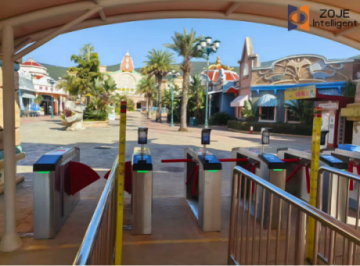
1. Multidimensional Security Protection: Building a Robust Spatial Security Barrier
The intelligent access control system, with "proactive early warning + precise interception" at its core, builds a comprehensive security protection system to eliminate security risks at their source. In the identity verification process, the system supports multimodal recognition of "face recognition+ IC card + ID card + fingerprint recgnition." Compared to traditional single-card reading, verification accuracy is significantly improved, effectively preventing security vulnerabilities caused by lost or misused cards. For example, after implementation in a corporate park, the likelihood of unauthorized personnel gaining access through borrowed or copied cards is reduced. Simultaneously, the system connects to a blacklist database; if information on high-risk individuals is detected, an audible and visual alarm is immediately triggered, and access is blocked. The short response time adds an intelligent layer of security to the park. For high-security needs in special scenarios, the access control system can also be equipped with a video link function: when the access control system detects abnormal operations (such as violent collisions or multiple failed checks), it automatically connects to on-site surveillance cameras to capture images and simultaneously sends them to the management system, facilitating real-time monitoring and rapid staff response. In judicial environments such as prisons and detention centers, combined with the physical isolation of full-height turnstiles, strict control with "zero illegal entry" can be achieved, creating a comprehensive spatial security barrier.
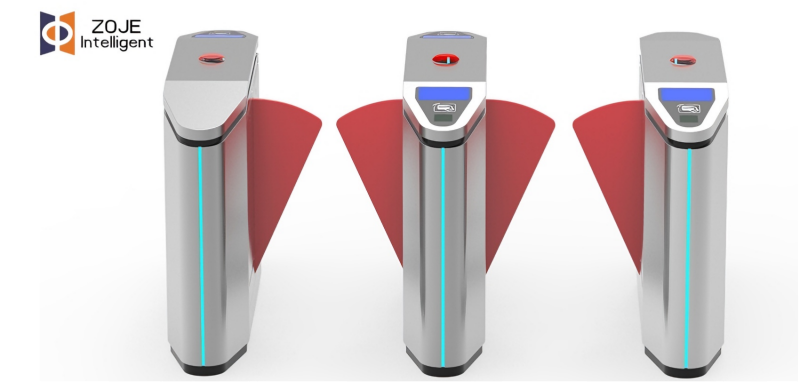
2. Efficient and Convenient Access: Rebuilding the Daily Entry and Exit Experience
For frequent users, the access control system offers instant facial recognition with a fast response time. A single channel can handle 25 to 30 people per minute, three times more efficient than traditional manual registration. During morning rush hours in office buildings, employees can enter quickly simply by raising their face and pass the turnstiles, eliminating the need to swipe a card and effectively alleviating elevator congestion. In community settings, seniors and children can easily enter without carrying identification thanks to the "family facial linking" feature, thus avoiding the inconvenience of forgetting their cards. For visitor management, the access control system innovatively introduces the "remote appointment + temporary authorization" mode: visitors upload their identity information in advance via a WeChat mini-program, which, after review by the owner or administrator, generates a temporary facial authorization or QR code. Upon arrival, manual registration is not required. Access is granted directly through facial recognition or code scanning, eliminating contact throughout the entire process, improving the visitor experience, and reducing the risk of crowding. After implementing this feature in a high-end community, visitor registration time was reduced from an average of 5 minutes to 30 seconds, significantly improving resident satisfaction.
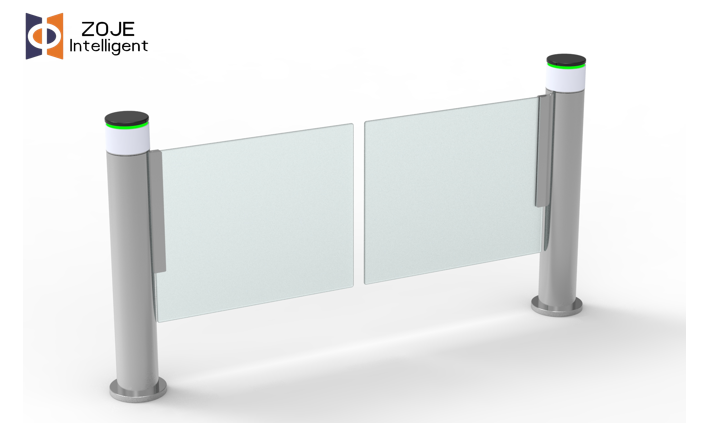
3. Intelligent Management: Cost Reduction, Efficiency Improvement, and Greater Convenience
In addition to security and convenience, intelligent access control systems also reduce costs and increase administrator efficiency by offering automated, data-driven management, thus optimizing the use of human resources.
The combination of access control systems and turnstiles allows for the recording of every access point, including staff identity, entry and exit information, and verification methods, generating visual reports and enabling data review every 90 days. Companies can automatically calculate employee attendance using access control data, eliminating the need for manual verification; community property management can use pedestrian flow data to determine peak hours and rationally allocate security personnel, reducing labor costs by more than 60%. Simultaneously, the system features a self-diagnostic function that automatically detects the equipment's operating status after power-up. If problems occur, such as a mechanism jam or sensor failure, real-time alarm information is sent to maintenance personnel. Combined with remote parameter adjustment capabilities, this significantly reduces the frequency of on-site maintenance, improving its efficiency by 80%.
Regarding environmental adaptability, the smart access turnstiles is constructed of 304/316 stainless steel with an IP65 protection rating. It operates stably in a temperature range of -20°C to 60°C, maintaining reliable performance in coastal environments with salt spray as well as in the low temperatures in winters. It offers an exceptionally long lifespan and lower long-term operating costs. From the efficient management of corporate parks to the protection of residential communities and the rapid transit of transportation hubs, the intelligent entry and exit access control system prioritizes security as its foundation and convenience as its primary element, redefining entry and exit management models through technological innovation. In the future, thanks to the deep integration of AI and IoT technologies, the system will also achieve integration with elevators, lighting, security systems and other technologies, creating a smarter and more integrated space management ecosystem and offering users a superior access experience.