How to Implement an Anti-Tailgating Solution for Airport AB Speed Turnstile Gate?
In airport security systems, "anti-tailgating" is one of the main challenges in ensuring passenger safety and maintaining order in air traffic. Especially in sensitive areas such as security checkpoints, VIP areas, and crew access routes, traditional single-door turnstiles are prone to security vulnerabilities where "one person passes their ID and several people sneak in." The airport AB speed turnstile gate solution, based on double door interlocking technology and an intelligent verification system, achieves the goal of "precise verification for one person, one entry" through the dual protection of "physical isolation + intelligent identification," making it the preferred solution for airport security upgrades. This article will thoroughly analyze the implementation process of this solution from four perspectives: solution design logic, main components, implementation process, and advantages.
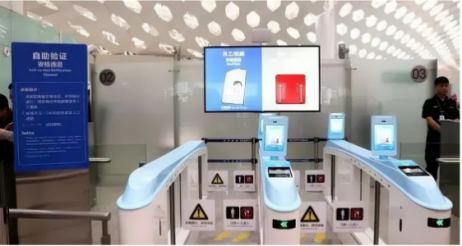
Fundamental Logic of the Solution Design: Eliminate gaps with interlocking and improve efficiency with intelligence.
The fundamental logic of the anti-tailgating solution for AB speed turnstile gate consists of building a closed-loop "entry-verification-release-lock" management process through the coordinated control of the two gates (Gate A and Gate B) and multidimensional intelligent verification technology. Its basic principles can be summarized in three points: first, "double-door interlocking," meaning that when Gate A is open, Gate B is forcibly locked, and when Gate B is open, Gate A closes automatically, physically preventing collapse; second, "intelligent verification," which ensures the unique identity of the person passing through using multi-biometric identification; and third, "abnormal linking," which immediately activates an alarm and locks the gate upon detecting sneaking, climbing, or other abnormal situations, triggering a rapid response from the airport security system. This solution is primarily applied to scenarios such as connecting airport security waiting areas with security checkpoints, international/domestic flight transfer lanes, dedicated crew lanes, and entrances to controlled airport areas. It meets the Civil Aviation Administration's "high security" management requirements while ensuring efficient passenger flow.
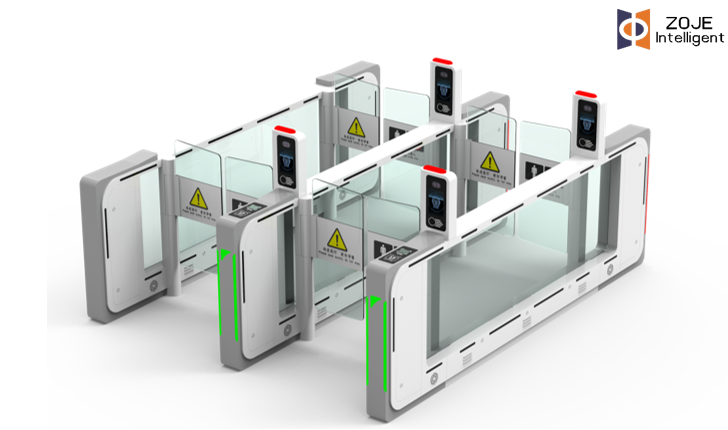
Main Solution Components: Hardware Connection + System Support, Creating a Three-Dimensional Security Network
A complete turnstile solution with an anti-tailgating AB speed turnstile gate requires precise hardware connection and intelligent software system control. The main components include four modules:
1. Double-Gate Interlocking Turnstile Hardware: The "First Line of Defense" Against Collapse
Turnstile selection should be based on airport performance and scenario requirements, prioritizing side gates and swing gates (for high-traffic areas) and high-speed gates (for VIP or controlled areas). The main configurations include:
First, an interlock control module with an integrated link controller to ensure real-time synchronization of the two doors' status and compatibility with the "automatic door opening and shutdown" emergency function; second, anti-crushing and anti-climbing devices equipped with infrared beam sensors and pressure-sensing strips to prevent passengers from being crushed and to detect climbing behavior; third, passage status indicator lights that clearly indicate "no entry," "entry permitted," and "abnormal wait" states with red, green, and yellow colors, guiding passengers to proceed in an orderly fashion.
2. Multidimensional Intelligent Verification Terminal: The "Main Guardian" of Identity Verification
To avoid issues such as discrepancies between identification and physical documents, as well as proxy access, the verification terminal employs multimodal recognition technology to achieve accurate identity and document verification. The basic configuration includes: an ID card reader, a facial recognition camera, and a fingerprint recognition module (optional, for special groups such as flight crew). Advanced configurations can add a boarding pass scanning module, enabling triple verification (ID card, boarding pass, and facial recognition), connecting directly to the airport's flight system to ensure passenger information matches flight details.
3. Central Control System: The "Intelligent Brain" of the Solution.
As the core of the solution, the central control system must fulfill three main functions: first, control the connection of equipment, collect real-time data on the status of the double-door turnstile gates and the verification terminal, and precisely control the opening and closing sequence of the gates; second, manage personnel information, connect with the passenger information system and the airport security system, facilitate batch import and real-time synchronization of passenger and personnel information, and establish different access permissions for personnel (e.g., 24-hour access for crew and passenger access limited to the flight schedule of the same day); third, statistics and data traceability, automatically record access time, personnel information, and verification results, and generate real-time logs for abnormal situations, facilitating subsequent consultation and traceability.
4. Alarm and Anomaly Linkage Module: A "Rapid Response Mechanism" for Risk Management.
The solution incorporates a multi-level alarm mechanism to ensure rapid anomaly management: First, local alarms: turnstiles are equipped with audible and visual alarms that activate immediately upon detecting unauthorized access or forced entry after a failed verification; second, system linkage: alarm information is sent to the airport's security command center in real time, simultaneously displaying the location of the anomaly and on-site images (requires integration with the monitoring system); third, emergency linkage: in case of emergencies such as fires or earthquakes, the central control system can activate "emergency mode" with a single click, unlocking both gates simultaneously to ensure the rapid evacuation of personnel.
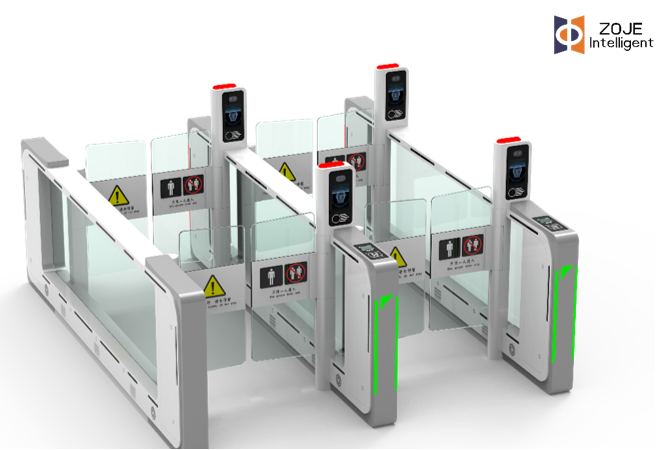
Complete Implementation Process: From Implementation to Debugging, Ensuring Effective Implementation
The implementation of the anti-tailgating AB speed turnstile gate must follow a process of precise planning, standardized installation, rigorous debugging, and staff training to guarantee seamless integration with the airport's existing security system.
1. Preliminary Planning: Determining the Solution Based on the Scenario
First, conduct a site survey to determine the installation location (for example, sufficient queuing space must be reserved at the security checkpoint entrance, and the checkpoint entrance should be near monitoring points); second, determine the number of gates based on traffic volume, typically configuring "1 set of Gate AB + 2 checkpoint terminals" per channel, with additional temporary channels added during peak hours; finally, coordinate with the airport's information department to clarify data interface standards, ensuring data interoperability between the checkpoint terminals, the flight control system, and the security system.
2. Equipment Installation: Standardized Construction Ensures Safety
The installation process must strictly adhere to the principles of "installation without power, precise fixing, and standardized wiring": Turnstiles must be fixed to the floor with expansion bolts to ensure horizontal stability, with a gap of less than 5 mm between the turnstile and the floor; the installation height of the verification terminal should be 1.2 to 1.5 meters to avoid backlighting and other obstructions; when wiring, a distinction must be made between high voltage (220 V power supply) and low voltage (verification and control signals), using insulated conduits to prevent signal interference. After installation, the area must be cleaned and the walkway leveled.
3. System Debugging: Scenario Simulation to Verify Effectiveness
Debugging is a crucial step to ensure the effectiveness of the solution. Several scenarios must be simulated and verified one by one: First, debugging of basic functions, testing the interlocking logic of the two doors (whether door B is locked when door A is open) and the verification speed; Second, abnormal scenario tests are performed, simulating eight common anomalies such as "tailgating", "proxy verification" and "forced entry", verifying the accuracy of the alarm mechanism and the door response; Third, the linking function is debugged, verifying the smoothness of alarm information transmission, the linking of the monitoring screen and the activation of emergency mode; and Fourth, stress tests are performed, simulating a throughput of 50 people/minute during peak hours to ensure stable and smooth operation of the system.