Why a Parking Ticket Validation Machine Should Not Be the Weak Link in Your Lot
At most parking lots, the first machine a driver touches is the one at the entrance. It prints a ticket, and later, the same machine takes that ticket back and decides whether the exit barrier opens. That device has a long, unglamorous job, and it is easy to buy one that looks fine for the first month and then causes trouble for years. Drivers rarely think about it, but the whole entrance depends on that one machine working correctly. The Parking Ticket Validation Machine from ZOJE is built to be the reliable part of that flow rather than the weak link.
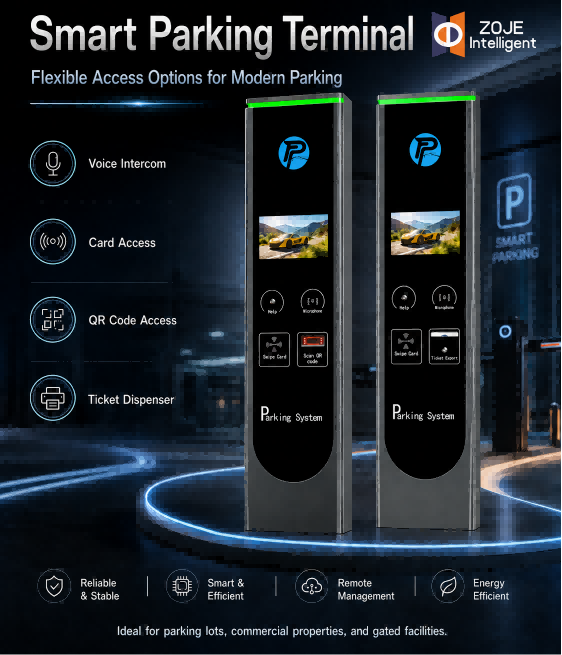
The hardware side is straightforward. The ZOJE-TP310 uses a high-strength carbon steel cabinet with a black front panel and silver accents, so it holds up to weather, sunlight, and the occasional bump from a car door. The internal structure is built to stay rigid, which matters more than most buyers realize. A machine that flexes or loosens over time will jam printers and misread cards, and those failures always seem to happen at the worst time. What makes this Parking Ticket Validation Machine different is not any single feature. It is the way the pieces are matched to daily operation.
Entry is handled through several credentials, and the machine switches between them easily. A driver can present a paper ticket, tap a smart card, or scan a QR code, depending on what the lot uses and what the driver happens to have. QR access works well for visitors who pay on the spot, while card access suits monthly users, and the paper ticket covers everyone else. Lots that serve mixed crowds need that flexibility, because a mall shopper, an airport traveler, and a monthly pass holder do not all carry the same thing. Flexible authentication is the reason a Parking Ticket Validation Machine fits a busy lot without forcing a single way of paying.
The ticket side of the operation is where a Parking Ticket Validation Machine earns its keep. On entry, the built-in thermal printer issues a ticket quickly, so the queue keeps moving. On exit, the driver inserts or presents the same ticket, and the machine checks it, calculates the fee, and releases the barrier. The printer uses standard 58-millimeter thermal paper with a long roll, and it is rated for continuous use, so staff change it less often during busy shifts.
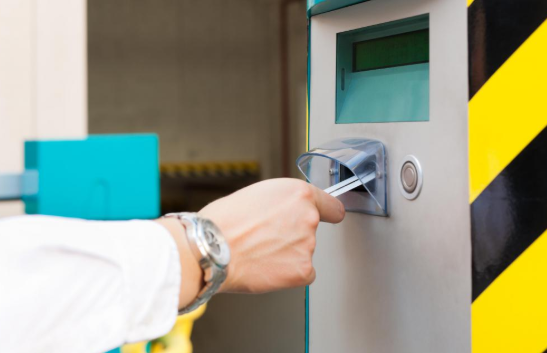
Validation accuracy is the part that usually separates a good Parking Ticket Validation Machine from a frustrating one. Lost tickets, expired passes, and drivers who arrive without a ticket all have to be handled without blocking the lane. The machine deals with these cases through clear prompts and voice guidance, so the driver knows exactly what to do and the operator does not have to run out to the lane.
The other big advantage shows up after installation. The machine connects to ZOJE's operation and maintenance platform over the network, and abnormal events are pushed to the backend as they happen. Operators can monitor device status in real time from the cloud, run remote upgrades, change parameters, and collect logs without sending a technician to the site. A technician can check a machine from a phone or a computer instead of driving there, which changes the cost structure of maintenance for a multi-lot operator. Remote management changes how a Parking Ticket Validation Machine is maintained, because a small problem can be fixed before it becomes a closed lane.
Parking lots lose network connections, and a Parking Ticket Validation Machine cannot simply stop working when that happens. The ZOJE-TP310 supports full offline operation. Tickets still print, cards still read, and validations still go through. When the network comes back, the machine auto-syncs the data, so the operator does not lose records or have to reconcile them by hand.
The working conditions for this machine are not gentle. The Parking Ticket Validation Machine has to survive the weather before it can do anything else. ZOJE rates the unit for temperatures from minus 30 to plus 70 degrees Celsius and relative humidity up to 95 percent without condensation, so it can sit at an outdoor entrance in most climates. The built-in LED display content can be customized, and voice prompts can be set to match the site, which is a small detail that makes a big difference in how smooth the lane feels.
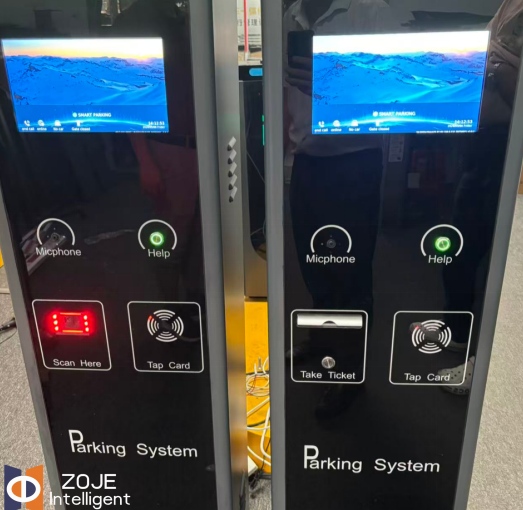
Behind the front panel, the machine is easy to fit into an existing setup. It communicates over TCP/IP, RS232, RS485, or Wiegand, which covers most controllers and barriers already installed. Power input is AC 220V with DC 12V operation, and the internal speaker and industrial display are chosen for continuous use. For an integrator, choosing a Parking Ticket Validation Machine usually starts with compatibility. It tends to work with what is already on site, which keeps the cost of adding it low because the existing controller and barrier can usually stay in place.
The applications match where tickets are still the norm. Shopping centers, airports and transportation hubs, office buildings, and mixed-use facilities all use this type of machine. The same unit fits a commercial property that rents spaces and a gated facility that manages staff access, which is why the product shows up in such different places. Many of those sites also run a full parking management system behind the machine, and it feeds into that system cleanly. The mix keeps changing, but the ticket lane stays a reliable fallback for most operators. For lots that have not moved to full ANPR, it keeps the ticket-based lane working without being the source of problems.
None of this is glamorous, and that is the point. A Parking Ticket Validation Machine does its job best when nobody has to think about it. ZOJE backs the machine with a two-year warranty from the factory ship date, and the same engineering approach runs across its parking product line. For operators who are tired of the entrance machine being the weakest part of the lot, the ZOJE-TP310 is worth a closer look.