Comparison and Technical Advantages of Custom Full-Height Sliding Turnstiles
Standard pedestrian turnstiles are typically categorized by height into two main types: waist-high models—including sliding turnstiles, tripod turnstiles, swing turnstiles, and flap turnstiles—and full-height turnstiles. While waist-high turnstiles are the most widely deployed, their security is limited, as they can be easily climbed over. In contrast, full-height turnstiles offer superior security; however, they often feature a cage-like, visually imposing appearance and can be inefficient for users carrying luggage or navigating in wheelchairs.
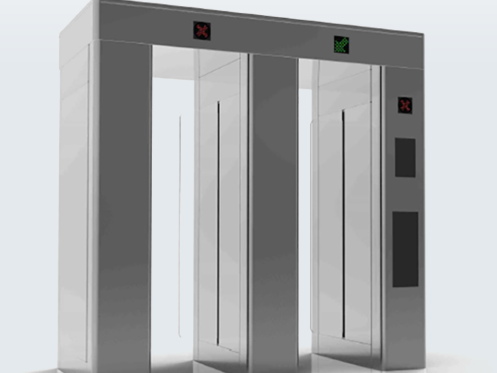
Recently, ZOJE developed a custom full-height sliding turnstile for a client—a solution that synthesizes the strengths of both sliding turnstiles and full-height turnstiles to achieve a perfect balance between high-level security and ease of passage. This full-height sliding gate represents a unique hybrid solution. It adopts the "fully enclosed" vertical barrier characteristics typical of turnstiles but replaces the rotating arms with a horizontal sliding mechanism. This custom configuration delivers robust security protection while maintaining a spacious, unobstructed passageway when open, effectively bridging the gap between sophisticated aesthetic design and rigorous perimeter fortification.
Differences Between Sliding and Rotating Mechanisms
When evaluating the engineering requirements for custom projects, the choice between a sliding mechanism and a rotating mechanism depends on several operational factors:
a) Space Efficiency and Passage Width: Full-height turnstiles are constrained by their circular footprint, which divides the passageway into narrow, pie-shaped segments. In contrast, the wings of full-height sliding gates move along linear tracks housed within the frame; this design allows for a wider clear passage width—accommodating large items and providing a more comfortable transit experience for individuals—without compromising vertical security height.
b) Mechanical Complexity and Customization: Unlike the mass-produced components found in standard tripod turnstiles, driving 2.2-meter-high sliding gate wings requires specialized high-torque motors and reinforced linear guide rails. The synchronization of the two large wings moving horizontally demands precise calibration to ensure they close at the center position with zero gaps. Such engineering precision is typically found only in non-standard, custom-engineered equipment.
Structural Specifications and Material Durability
The structural design of this turnstile is engineered to withstand long-term use in demanding environments—such as industrial sites or high-security residential perimeters.
a) Material Composition: The frame and housing are constructed from 304 stainless steel. This material was selected for its exceptional resistance to corrosion and oxidation—a critical attribute for outdoor installations exposed to variable weather conditions. A brushed surface finish ensures that the unit maintains a professional aesthetic over its operational lifespan with minimal maintenance.
b) Mechanical Strength: Standing at a height of 2.2 meters, the turnstile is designed to maintain stability during high-frequency operation. The internal frame is reinforced to support the weight of the full-height gate wings and the drive system, thereby ensuring that the alignment of the sliding tracks remains precise and free from displacement throughout millions of opening and closing cycles.
Integrated Intelligent Logic and Identification
Physical barriers are effective only when the accompanying control systems are equally robust. These custom-designed turnstiles achieve this by integrating control boards that interface seamlessly with modern security protocols.
a) Anti-Tailgating Logic: The system employs an array of multi-point infrared sensors positioned both vertically and horizontally across the passageway. This enables the turnstile to distinguish between a single authorized individual and a second person attempting to follow closely behind. If tailgating is detected, the logic controller can trigger an alarm or pause the closing mechanism to prevent unauthorized entry
b) Identification Systems: One of the primary advantages of these custom turnstiles is their ability to integrate with a wide range of third-party access control hardware. Depending on the facility's existing security protocols, they can be equipped with RFID card readers, biometric facial recognition modules, or QR code scanners.
Safety and User Experience
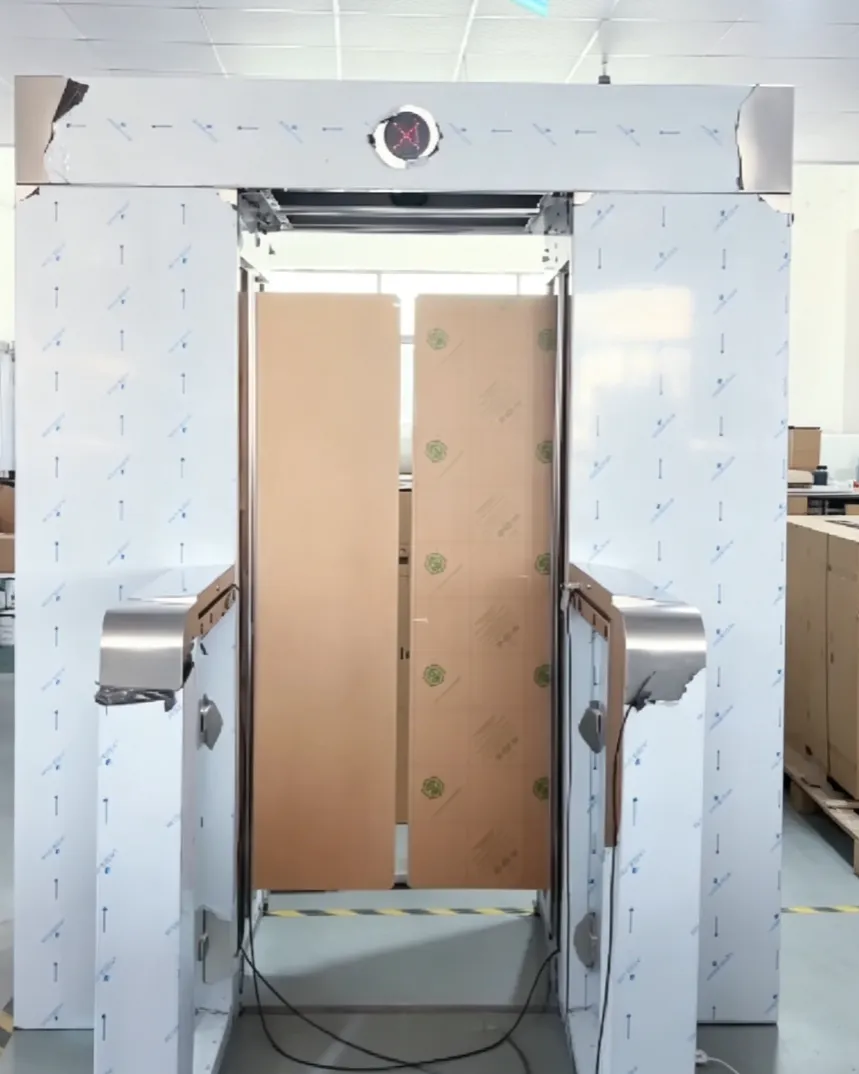
a) Infrared Anti-Pinch Technology: If an obstruction (such as a person or object) is detected within the path of the sliding gate wings, the system will immediately stop or reverse the motor. For a turnstile of this size and weight, this constitutes a critical safety feature.
b) Guidance Indicators: The turnstile incorporates LED directional displays and voice prompts to assist users during the passage process. Clear visual and audio signals minimize user errors and ensure a steady flow of pedestrian traffic.
For facilities requiring a higher level of perimeter security than standard products can provide, the custom full-height sliding turnstile offers an effective solution. By combining the durability of 304 stainless steel with a highly secure sliding design, this turnstile effectively prevents common methods of intrusion—such as climbing over—while maintaining a practical passage width for all users. Our commitment to customization enables us to tailor both hardware and software to meet the precise security and architectural requirements of each specific project.