Tripod Turnstiles Enable Smart Access at Indian Stadium
Over the past two years, with the gradual resurgence of global performances, sporting events, and large-scale gatherings, venue operators have placed increasingly stringent demands on personnel throughput efficiency and security management. The expanding scale of audiences—coupled with concentrated entry periods—has exposed the inherent limitations of traditional manual ticketing and simple verification methods, which suffer from low efficiency, a high propensity for error, and an inability to effectively handle peak crowd flows. Consequently, the challenge of facilitating rapid and orderly entry while simultaneously ensuring security has emerged as a critical issue that event organizers must urgently address.
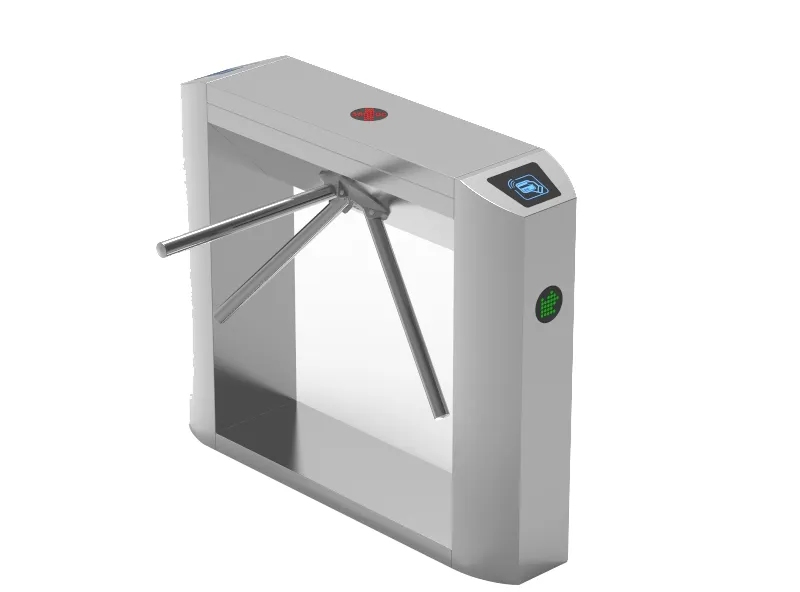
As a mature and reliable form of access control equipment, the tripod turnstile has demonstrated exceptional suitability for large-scale event environments, thanks to its simple structure, stable operation, and robust anti-tailgating capabilities. Its core mechanism employs three unidirectionally rotating arms to physically regulate pedestrian flow: upon the successful verification of a single individual, the arms rotate 120 degrees to permit one passage, subsequently resetting automatically. This design effectively prevents multiple individuals from forcing their way through simultaneously or attempting to evade fares by entering in the reverse direction. Furthermore, tripod turnstiles boast a high throughput rate (typically exceeding 30 people per minute), low power consumption, and strong weather resistance; constructed predominantly from stainless steel, the units are well-equipped to withstand prolonged outdoor exposure and operate reliably in complex environmental conditions.
Recently, ZOJE successfully completed and officially commissioned a tripod turnstile access control system project for a stadium in India. Primarily deployed within the venue's core entry zones, the system is designed to regulate spectator flow, enhance entry efficiency, and—in conjunction with on-site security protocols—ensure the orderly execution of overall venue operations. Given the high pedestrian density and concentrated entry periods characteristic of stadium events, the project specified the use of tripod turnstiles featuring SS304 stainless steel casings. These units offer superior corrosion resistance and impact durability, enabling them to withstand the local Indian climate—characterized by high temperatures and dusty outdoor conditions. Additionally, the equipment surfaces feature a brushed finish, striking a balance between aesthetic appeal and ease of cleaning.
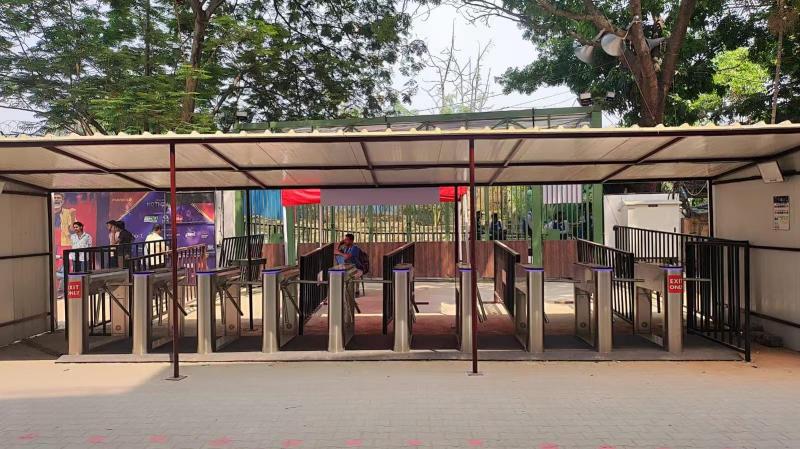
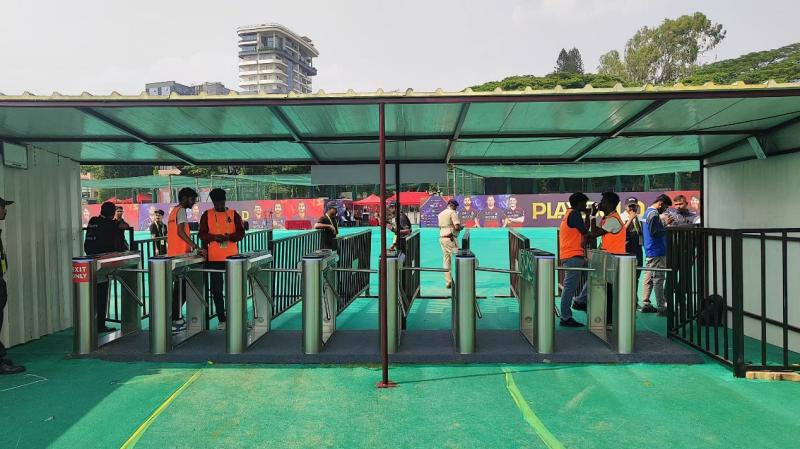
Based on actual operational performance at the site, the installed batch of tripod turnstiles has demonstrated remarkable stability, efficiently processing the entry requirements of thousands of spectators during daily peak hours. Crucially, the tripod turnstile system has also achieved seamless integration with the venue's local ticketing infrastructure and identity verification platforms. Attendees simply present their pre-purchased tickets—whether in paper form or as an electronic QR code. Once verified by the scanner module integrated into the turnstile, the tripod turnstile automatically unlocks and rotates its arms to grant access. For scenarios requiring identity verification, the system can be integrated with facial recognition or ID card readers to facilitate a "ticket + ID + person" triple-match verification process. The entire verification and access procedure takes less than two seconds, significantly reducing manual verification costs while simultaneously mitigating risks associated with forged tickets and unauthorized entry.
From a management perspective, the deployment of tripod turnstiles ensures a more orderly flow of people within entry areas. Through physical barriers and the unidirectional control provided by the rotating arms, the system effectively prevents overcrowding and ticket evasion. Security personnel are no longer required to manually inspect every ticket; instead, they can focus their efforts on monitoring for abnormal behavior and responding to emergency situations. Furthermore, the project implementation process took full account of on-site installation conditions and the specific characteristics of temporary event venues. The tripod turnstiles feature a modular design that allows for rapid assembly and disassembly; their bases can be weighted down or anchored into the ground, ensuring adaptability to varying surface conditions across different venues. The overall layout of the access lanes is clean and intuitive, utilizing guide railings to clearly delineate "verified entry lanes" from "ticket verification zones." This design enables attendees to quickly identify entry and exit directions while providing security personnel with an unobstructed field of view and ample operational space.
As the global markets for live performances and sporting events continue to expand, the demand for such access management solutions is steadily on the rise. As a channel control device that offers both cost-effectiveness and reliability, the tripod turnstile retains broad application prospects across various settings—including large-scale events, public transportation hubs, scenic tourist spots, and corporate campuses. Moving forward, ZOJE will continue to address the specific needs of diverse markets by further optimizing product performance in key areas—such as anti-tailgating algorithms, adaptability to extreme environmental conditions, and deep integration with intelligent ticketing systems—thereby delivering customized solutions that are perfectly tailored to the unique requirements of each application scenario.